Thursday, 17 January 2019

Theresa May's Brexit shambles


As the clock ticks down over Brexit, and the deal offered by Theresa May is rejected, and she clings desperately on to power while claiming to be reaching out to other parties but at same time wont budge one inch.,it is clear to many that she simply can't be trusted.
Her sudden repositioning of herelf as a kindly consensus builder is an extraorfdinary illustration of her utter delusion and her seemingly endless willingness to completely reverse her political stance in order to preserve her own personal self interest.
Lets not forget that the 21-month period initially agreed was  from the beginning never, ever going to be sufficient to negotiate something as complex as a new trading relationship between the United Kingdom and the European Union.
By saying that the door is suddenly open to the opposition parties to help her find a solution to the Brexit shambles she has created, she's brazenly  demonstrating her incompetance too, by hastily attempting to do the consesus building that she actually needed to do at the very beginning of the Brexit process.
After  suffering the worst parliamentary defeat by a British Prime Minister in history and refusing to stand down, Jeremy Corbyn mocked how unreliable her confidence and supply agreement was for maintaining her minority government: “Last week they lost a vote on the Finance bill, that’s what called supply. Yesterday they lost by the biggest margin ever, that’s what’s regarded as confidence.
“By any convention of this House, by any precedence, loss of both confidence and supply should mean they do the right thing and resign.”
 The SNP’s Pete Wishart added: “She’s lost a quarter of her Cabinet, 170 members of her backbench want her gone, she’s experienced the biggest defeat in parliamentary history, what shred of credibility has her Government got left? For goodness sake, Prime Minister won’t you just go?”
But though the diminished government limped through to fight another day in parliament, it looks weaker than ever, Theresa May is certainly not looking strong and stable.
Yet the rancid Daily Mail reverts back to type, in such a horrible misrepresentation of reality. It is so typical of Tory MPS and the Tory press to now blame Jeereny Corbyn for the Brexit chaos. The bloody Daily Mail has been calling for a no-deal Brexit for months.


Lets be prepared for another round of hateful Tory smear campaigns against the Labour leader, this time over Brexit.What is clear is that after the historic and humiliating defeat for the Prime Minister, there is absolutely no confidence in her Brexit‘deal.
The Prime Minister must not come back and try to pass her deal again in an attempt to continue to run down the clock. It is as dead as a Monty Python parrot. It has ceased to exist. Polls  actually show public opinion has steadily turned against Brexit.the whole mess has highlighted serious flaws in our political system . Whatever side uou are, leave or remain, the system is clearly not working for this country.
How can anyone seriously now put their faith in Theresa May after all her blatantly self serving reversals is absolutely baffling, many now  believing  it's time to let the people decide and call a General election immediately.Because without trust you simply cannot lead, it's  time for Theresa May to do the decent thing and go.

Tuesday, 15 January 2019

Remembering Rosa Luxemburg


The 15th of January marks the anniversary of Rosa Luxemburg,Marxist theorist, agitator, internationalist, philosopher, economist being shot and  murdered when her body was thrown into the Landwehr Canal in Berlin, by right wing troops  opposed to the revolutionary movement that swept through Germany in the wake of the First World War. Long has she continued to inspire..
Rosa Luxemburg was born on March 5, 1871, in the city of Zamosc, Poland, then under control of czarist Russia. Her father, Eliasz Luxemburg, was a prosperous timber trader, who had inherited his business from his father, Abraham. of Polish Jewish descent who became a naturalized German citizen. Rosa’s mother was Lina Loewenstein, the daughter of a traditional rabbi and sister of a Reform rabbi. Rosa, who grew up speaking German, Polish and Yiddish, was the youngest of the couple’s five children. As a young child, she suffered from a hip ailment, which left her permanently afflicted with a limp.
During Poland’s 1863 uprising against Russian rule, Eliasz supplied the independence movement with weapons, so that for several years after the revolt’s failure, he had to remain in hiding from czarist authorities. In 1873, the family moved with him to Warsaw, where Rosa attended the gymnasium.
Even during high school, Rosa was drawn to politics, becoming active in the Proletariat party, a forerunner to the Polish Socialist party. After several of her comrades in the party were arrested and executed, she decided to pursue her higher education in Switzerland.
Luxemburg began at the University of Zurich as a student of zoology but ended up focusing on economics, philosophy and law. Throughout her political career, Luxemburg consistently opposed Polish nationalism, believing that socialist action had to take place on the international level, and that a separate revolution in Poland would be self-defeating.
Similarly, she was opposed to Jewish nationalism or separatism. Though she was sensitive to the problem of anti-Semitism, she was sure it would disappear with the overthrow of capitalism. since 1899,she became an important figure in the world socialist movement, and became involved in the international organisation of workers overcoming physical infirmity and the prejudice she faced as a Jew to become an active revolutionary whose philosophy enriched every corner of an incredibly productive and creative life.
After finishing her studies, Luxemburg moved to Germany, gaining citizenship via a marriage of convenience and  became a member of the Social Democrat Party of Germany (SPD), becoming a  leader  of the radical wing of the Party , however  she broke with the SPD  after it supported the imperialist drive towards war, she believed in the build up to the First World War that ' workers blood should not be shed in defence of the capitalist system'.
Though Luxemburg was militant about the idea of proletarian revolution, she was anti-militarist. She believed in democracy and was an outspoken opponent of the Bolsheviks’ belief that a small cadre of bureaucrats should made political decisions on behalf of the proletariat: Revolution had to be political as well as economic, she felt.
Because of  her socialist agitation during this terrible war , she was imprisoned for it's duration, but after Germany's defeat she was released, and with her friend Karl Liebnecht,  formed the anti war Spartacist league, and  she assumed the leadership of the radical independent socialists. Her will and her desire was to see an end to all exploitation and oppression.
Her faith was a socialist idea  that  combined the powerful passion of both mind and heart. She devoted herself to the cause of revolution,and its preparation. She lived and breathed its fire, with selflessness and devotion, in every waking moment she dedicated herself to its cause.  Standing bravely up for freedom with a  strong powerful intellect. An individualist, she formulated her own ideas, using her own words to energise and radicalise the people and bring about a socialist revolution.  She argued that " The mass strike is the first natural, impulsive form of every great revolutionary struggle of the proletariat and the more highly developed the antagonism is between capital and labour, the more effective and decisive must mass strikes become. The chief form of bourgeois revolutions, the fight at the barricades, the open conflict with the armed poor of the state, is in the revolution today only the culminating point, only a moment on the process of the proletarian mass struggle."
She followed no leader, was no ones puppet and when  she criticised Lenin,  it was in relation to dictatorial aspects. She said " Terror has not crushed us. How can you put your trust in terror."
She quoted Leon Trotsky saying "As Marxists we have never been idol worshippers of formal democracy." She went on "All that really means is: We have always distinquished the social kernal of social inequality and lack of freedom hidden under the sweet shell of formal equality and freedom - not in order to reject the latter but to spur the working class into being satisfied with the shell, but rather, by conquering political power, to create a socialist democracy to replace bourgeois democracy - not to eliminate democracy altogether....... but socialist democracy is not something which begins only in the promised land, after the foundations of socialist economy are created, it does not come as some sort of Christmas present for the worthy people who, in the interim, have loyally supported a handful of socialist dictators. Socialist democracy begins simultaneously with the beginnings of the destruction of class rule and the construction of socialism. It begins at the very moment of the seizure of power by the Socialist party. It is the same thing as the dictatorship of the proletariat. Yes, dictatorship! But this dictatorship consists in the manner of applying democracy, not in its elimination, but in energetic, resolute attacks upon the well-entrenched rights and economic relationships of bourgeois society, without which a socialist transformation cannot be accomplished. But this dictatorship must be the work of the class and not of a little leading minority in the name of the class - that is, it must proceed step by step out of the active participation of the masses, it must be under their direct influence, subjected to the control of complete public activity; it must arise out of the political training of the mass of the people."
Possibly her  believe in democracy is what failed her philosophically, nevertheless the questions she posed still worth looking at today. She also wrote " the revolution is the sole form of war, and this is also its most vital law - in which the final victory can be prepared only by a sense of defeat.".
She had determination by the buckets and a steely willful commitment.She herself took part  in  revolutionary events , recognising the need of a revolutionary party, which could unite and give a lead in a revolutionary situation, seeing  socialism as a movement of the proletarian masses that should emphasise unity and equality rather than highlight the oppression of any particular group, with an undogmatic commitment to an unfinished notion of freedom that still appeals to many people today.
In November 1918 after four years of war, German society crumbled both at the front at home, and a revolutionary fervour swept the land, the working class took to the streets in a series of strikes and the navy mutinied., though critical with some demands of the revolutionary movement, Rosa threw in her lot with her comrades, believing that she could not simply wait on the sidelines. Subsequently on the night of January 15, 1919 she  and  Liebnecht were abducted, tortured in the luxury Hotel Eden, and then driven seperately to the nearby Tiergarten Park and murdered, Liebknecht was delivered to the  city morgue while Lixemburg was dumped into a canal. They were both 47.
Her body was only recovered five months later after the winter ice had thawed. She was buried next to Liebknecht in the Friedrichstelde Cemetery.
Famously on the evening of her murder almost certainly knowing that her fate was sealed she wrote.
'"The leadership has failed. Even o, the leadership can and must be recreated from the masses and out of the masses. The masses are the decicive element, they are the rock on which the final victors of the revolution will be built. Order reigns in Berlin! Your 'order' is built on sand. Tomorrow the revolution will already raise  itself with a rattle and announce with fanfare, to tour terror; I was, I am, I shall be!"
Today her ideas can be pressed into many meanings. There is a feminist Rosa, an anarchist Rosa, then there is a red Rosa, but she remains an icon in the truest sense of the word.She has become part of Germany's cultural memory, immortalised in art, poetry, an award winning biopic , a musical and a graphic novel. And in her own words too, a well as being a brilliant Marxist theorist. Luxemburg was a prolific writer of letters, and her emotive lyrical writing has seen her emerge as a literary figure in her own right.Here's to Red Rosa, lets hope her spirit is not forgotten. Peace, bread, roses,Her revolutionary socialist politics endure because the struggle against barbarism remain as relevant as ever.
Here is poem written by Bertolt Brecht in 1920 about Rosa.

About the drowned girl - Bertolt Brecht

As she drowned, she swam downwards and was borne,
From the smaller streams to the larger rivers,
In wonder the opal of the heavens shone,
As  if wishing to placate the body that was hers.

Catching hold of her were the seaweed , the algae,
Slowly she became heavy as downwards she went,
Cool fish swam around her legs, freely,
Animals and plants weight to her body lent.

Dark light smoke in the evenings the heavens grew,
But early in the morning the stars dangled, there was light,
So that for her, there remained too,
Morning and evening, day and night.

Her cold body rotted in the waters there,
Slowly, step by step, god too forgot,
First her face, then her hands, and finally her hair
She became carrion of which the rivers have a lot.

 
Luxemburg and Liebknecht are commemorated  every tear on the sexond Sunday of January when red flowers are scattered on their graves.


She was also much admired by Sylvia Townsend Warner (1893 -1978), a muicologit, composer, poet and novelist, who gained little recognition for her poetry during her own lifetime, who once joked, ' I intend to be a posthumous poet!
Like Rosa Luxemburg, she was appalled by the militarim of the First World War. Here is her tribute to Rosa Luxemburg , first published in her 1925 collection The Espalier.

I Bring Her a Flower

Sweet faith
Such looks of quiet hath
That those on whom she’s smiled
Lie down to sleep as easy as a child.


No night,
However dark, can fright
Them, no, nor day
To come, however bleak and fell, dismay.

But sound
Sleep they in prison-bound
As when at liberty
And if they wake, they wake in charity;

Like her,
Who rousing at the jar
Of weary foot in the rain
Pitied the wakeful sentry for his pain.

(1925)

Further Reading

Rosa Luxemburg: A reapraisal - Lelio Besco
Andre Deutsch, 1975.

Rosa Luxemburg: A life
- Elizvieta Ettinga , Beacon Press 1987.

The letters of Rosa Luxemburg, Verso

The essential Rosa Luxemburg :Reform or Revolution and the Mass Strike

Red Rosa;a Graphic  biography of Rosa Luxemburg - Kate Evans. Verso


"either capitalism will continue, with fresh wars and a rapid plunge intp chaos and anarchy, or else capitalist exploitation will be abolished." Rosa Luxemburg 14/12/18 Rote Fahne

"Revolutionary idealism .... can be maintained over any period of time only through the intensely active life of the masses themselves under conditions of unlimited freedom." Rosa Luxemburg

" Being human means throwing  your whole life on the scales of destiny when need be."Rosa Luxemburg

Saturday, 12 January 2019

Tomorrows Waiting Room


Among the implaceable infinitude'
flowing  thoughts  uncompromising
to swiftly past grey faces laughing,
lingering thoughts never fading
following earth, moon and sky
watching trees grow, love blossom;
in the treasure trove of lifes duration
we are all floating numbers on the dice,
so touch the flames, and feel your fingers burn
every space contains echoes that implode,
between the contours of life
that will never be  recaptured,
though the cuckoo keeps on calling
nothing stays the same;
tears will form ripples
flooding over points of view
nature  releases shades of answer
in the blurry mists of time,
expanding spirits onwards
new dawns approaching,
rivulets of imagination  unfolding
after rain or shine, nettles will always sting.

Thursday, 10 January 2019

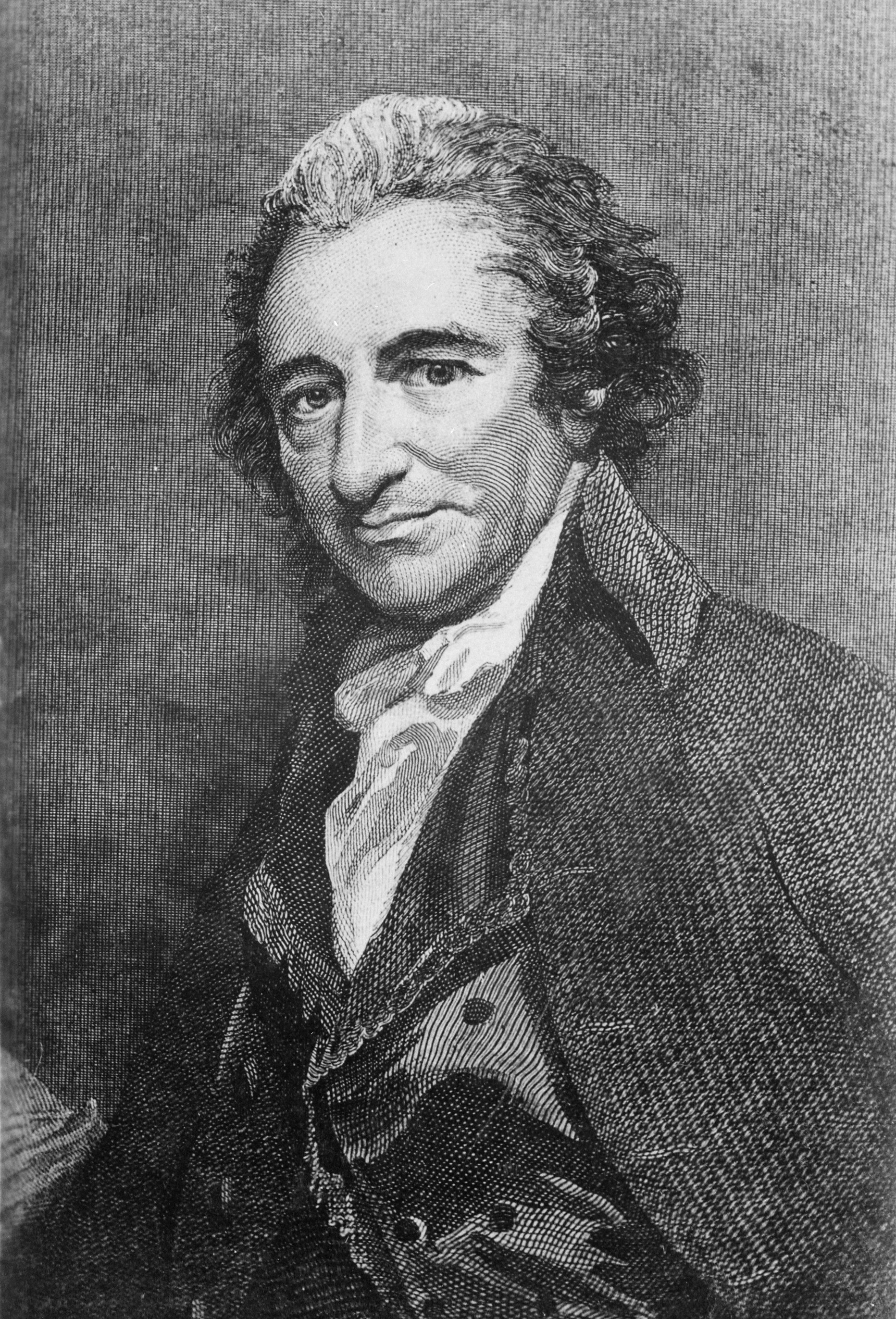
Thomas Paine (9/2/1737 -8/6/1809) - Common Sense


Thomas Paine was an English/American political activist, author and political theorist and revolutionary who emigrated to America in 1774. On  January 10 1776, his pamphlet Common Sense  was published for the first time ( though anonymously,because of its treasonous content.). Here he delivered his uncompronising message to the common people, which set the seeds for the American  Revolution.In this important document, he passionately urged the American to create a new form of government - a modern republic, based entirely on popular consent. He believed all men were born equal, so saw no need for Kings and Queens, he also distinguished  between governments and society, at the root of all governments is evil but the root of society lay good. The pamphlet called for the end of British tyranny in the American colonies and a break with a country ruled by kings. Common Sense made its appearance at a crucial moment as the debate for American independence reached a tipping point.
He became a champion of equality and liberty and went on to support struggles in Britain and France, going on to critisise organised religion and the role of the Church. Inspired by Paine, radicalism reached a new audience in the early 1790s, a mass expansion into 'members unlimited' which soon prompted the moderate reformers, the patrician 'Friends of the People', to draw away and apart from the democratic radicals, the plebeian 'Friends of Liberty'.
In Common Sense Paine came  forth with a document so powerful that the Revolution became inevitable. It was sold and distributed widely and read aloud at taverns and meeting places. In proportion to the population of the colonies at that time (2.5 million), it had the largest sale and circulation of any book published in American history. As of 2006, it remains the all-time best selling American title, and is still  in print today.With the publication of this pamphlet, Paine not only galvanized Americans, bu  gave them a voice. His pamphlet changed the American outlook on the war. Although Paine denounced the many British injustices in the pamphlet, the English constitution was the issue that he primarily wrote about in Common Sense. This was not enough on its own to bring about the radical thoughts to the people, so he continued to argue that the people ought to blame the King. Paine stated, “it is simple common sense to break away from such a corrupt and brutal government,” which gives support to his claims that the only solution left is that of independence.
Returning to Europe in 1787, and in response to Edmund Burke's Reflections on the Revolution in France, he published his most famous work, The Rights of Man, 1791-2, which advocated the constitutional guarantee of the civil rights of individuals. Paine fled to France and was briefly elected to the French National Convention. Imprisoned for opposing the execution of Louis XVI in 1793, he returned to America in 1802. His promotion of the concept of human rights influenced the American Constitution and the European Convention on Human Rights.
Sadly  Paine  died in miserable circumstances in New York in 1809, having spent his last years in America often depressed, drunk and diseased. Ten years later  William Cobbett dug up the bones and brought them to England - they have since disappeared - for a national memorial which, alas, has never materialised.

Extracts :-

Of the Origin and Design of Government in General. With Concise Remarks on the English Constitution.

' Some writers have so confounded society with government, as to leave little or no distinction between them; wheras they are not  only different, but have different origins. Society is produced by our wants, and government by our wickedness; the former promotes our happiness positively by uniting our affections, the latter negatively by restraining our vices. The one encourages intercourse, the other creates distinctions. The first is a patron, the last a punisher.
Society in every state is a blessing, but government even in its best state is but a necessary evil, in its worst state an intolerable one; for when we suffer, or are exposed to the same miseries by a government, our calamities are heightened by reflecting that we furnish the means by which we suffer. Government, like dress is the badge of lost innocence; the palaces of kings are built on the ruins of the bowers of paradise. For were the impulses of conscience clear, uniform, and irresistibly obeyed, man would need no other law giver; but that not being the case, he finds it necessary to surrender up a part  of his property to furnish means for the protection of the rest; and this he is induced to do by the same prudence which in every other case advises him out of two evils to choose the least.'

Of Monarchy and Hereditary Succession

' MANKIND being originally equals in the order of creation, the equality could only be destroyed by some subsequent circumstance, the distinctions of rich and poor may in a great measure be accounted for, and that without having recourse to the harsh ill-sounding names of oppression and avarice. Oppression is often the consequence, but seldom or never the Means of riches, and tho' avarice will preserve a man from being necessitiously poor, it generally makes him too timorous to be wealthy.
But there is another and great distinction for which  no truly natural or religious reason can be assigned, and that is the distinction of men into kings and subjects. Male and female are the distinctions of nature, good and bad the distinctions of Heaven; but how a race of men came into the world so exalted above the rest, and distinguished like some new species, is worth inquiring into, and whether they are the means of happiness or of misery to mankind.'

On the legitimacy of the English Monarchy

'  England, since the conquest, has known some few good monarchs, but groaned beneath as much larger number of bad ones, yet no man in his senses can say that their claim under William the Conqueror is a very honorable one. A French bastard, landing with an armed banditti, and establishing himself king of England against the consent of the natives, is in plain terms a very paltry rascally original. It certainly hath no divinity in it. However, it is needless to spend much time in exposing the folly of hereditary right, if there are any so weak as to believe it, let them promiscuously worship the ass and lion, and welcome. I shall neither copy their humility, nor disturb their devotion.'

On the Cause of Revolution

O ye that love mankind! Ye that dare oppose, not only the tyranny, but the tyrant, stand forth! Every spot of the old world is overrun with oppression. Freedom hath been hunted round the globe. Asia, and Africa, have long expelled her.—Europe regards her like a stranger, and England hath given her warning to depart. O! receive the fugitive, and prepare in time an asylum for mankind.'


 http://www.gutenberg.org/ebooks/147

Wednesday, 9 January 2019

End The Hostile Environment.


Doing my best to reboot after Christmas, still adjusting , feeling rather exhausted at moment, please be patient, normal service hopefully will be resumed shortly, as forces of division reappear ,the atmosphere still unconfortable, on the steps of uncertainty.
Some thoughts  though  as right wing elements like Tommy Robinson acolyte James Goddard make a nuisance of themselves outside Westminster,  and  "UK Yellow Vests," who have started donning high-vis jackets at their standard anti-immigration protests around the country hoping to gain some form of  credibility by aligning themselves with a mass movement that has nothing to do with  them.
Let's remember they are they aren't the Gilet Jaunes (Yellow Vest) movement of  France, who over the last 2 months has  grown from being an anti-tax protest to a generalised revolt against Macron and in some places, capitalism itself. They are though the same  bunch of yellow vest fascists. who  last Saturday saw  them attacking  striking transport workers  from the RMT union , who had been campaigning over cuts to safety-important train guard roles, attacked for being leftist and part of the organised working class. An Asian picket was abused and called a sex offender, paedophile and nonce.One fascist took a video in a vest with Tommy Robinson news written on it, there were people there wearing DFLA and EDL t-shirts, and ex-BNP Liverpool 2012 mayoral candidate Mike Whitby was there abusing pickets.
We have to continue to oppose the far right and fascists in Britain in their attempts to claim the mantle of the "yellow vest " movement here in Britain to stir up racism and Islamphobia, with their racist and divisive policies that combined  with bizarre conspiracy theories and language , that  is so far removed from what has so far been shown in France.
All this happening  at a time when  we have the Tories and the right wing  media  ratcheting up racist scapegoating of refugees and migrants, trying to whip a frenzy about scores of people crossing the Channel and coming to Britain. This hostility is part of the wider hostile environment  against migrants and refugees fleeing poverty and war.  Punitive immigration policies that  mean families are routinely torn apart for not having enough money, and people are criminalized simply for seeking safety, or a better life. In Britain alone, over 30,000 people are locked up in immigration detention centres each year.
We should reflect on the fact  that many of these people left their homes because of reasons outside their control, whether that was conflict, poverty, economic injustice or climate change. The UN’s Refugee Agency estimates that 20 people are forced to flee their homes every second. With global inequality at unprecedented levels,  modern borders have become a form of global apartheid: segregating who can and can’t access resources and opportunity, in Britain there is even an explicit policy aiming to create a ‘hostile environment’ for migrants – launched by the current prime minister, Theresa May, when she was Home Secretary.
Bank managers, NHS staff and landlords are routinely required to perform the role of immigration officers, monitoring people’s immigration status, as borders increasingly become part of everyday life and the government forces undocumented migrants further underground.
The related policy of mass deportation means even those who make it  are often sent back to the very violence and hardship they fled from in the first place. Deadly deportation schemes means people are returned to countries where they risk persecution, torture and even death.  No borders are necessary. Refugees and migrants welcome.  Time  now to untangle these forces  of division and unreason, keep saying no and not giving in  to racist rhetoric, end this hostile envronment now.

Monday, 7 January 2019

Theresa May admits she still hasn't seen 'I, Daniel Blake' after backlash


Theresa May has admitted she cares so much that she has not been bothered to watch the film ' I, Daniel Blake'.
This comes after Tory deputy chairman  James Cleverly was accused of lacking "any sort of humility" over online comments he made about the film.  He faced a barrage of criticism on social media after saying Ken Loach's Bafta  winning drama was  "not a documentary " and  " a work of fiction."
The MP for Braintree later posted a lengthy rebuttal, saying that the welfare system is "far from perfect" the film is a "political polemic" that is unfair on Job Centrre  workers.
The twitter row erupted as it emerged thre next pase of the Governments  flagship welfare  reform will be overhauled following widespread criticism of its planned roll out.
The BBC'S Andrew Marr mistakenly referred to the film as "I, Daniel Craig" but quickly corrected himsef, asking May if she had seen the film when it was broadcast.
She said " I didn't, no. "
He went on to ask her  why she was delaying Universal Credit roll out. May replied. "Throughout the introduction of Universal Credit, we've been very clear that we would roll it out as a steady process, learn as we were going along.
"We've done that. We've made changes to Universal Credit as we've been going along. We'll be saying more about the future in the coming weeks."
But she insisted it would be rolled out by 2020 as originally intended.
The film focused on the Kafkaesque ordeals of a 59-year old widowed carpenter who puts up with  health allowance benefits after suffering a heart attack, and  is an indictment of an entire social system in which Britain’s most vulnerable are being thrown overboard by a cold and cost-conscious bureaucracy that received its marching orders from the combined forces of New Labour and the Tories.
Daniel Blake  has worked as a joiner most of his life in Newcastle. Now, for the first time ever, he needs help from the State. He crosses paths with single mother Katie and her two young children, Daisy and Dylan. Katie’s only chance to escape a one-roomed homeless hostel in London has been to accept a flat in a city she doesn’t know, some 300 miles away.
Daniel and Katie find themselves in no-man’s land, caught on the barbed wire of welfare bureaucracy as played out against the rhetoric of ‘striver and skiver’ in modern-day Britain.
The movie's writer Paul Laverty has said the research team was stunned at how people with mental health issues and disabilities were targeted by the welfare cuts.He said people interviewed within the Department for Work and Pensions told them "they were humiliated at how they were forced to treat the public. There is nothing accidental about it."
The actress who played  the young single mother, Katie -- Hayley Squires,  who Daniel's character befriends, when the film originally came out  slammed anti-welfare "propaganda" that she said has turned working class people against each other. "Normal people are led to believe that this amount of people are on benefits and are therefore scroungers, and this amount of people are going to work to pay so that they can scrounge." "They've left us to argue among ourselves so they can keep doing what they are doing."
 I, Daniel Blake represents clearly our  Governments utter betrayal of people in need, who just want some  simple sustenance in order to survive, it exposes what is happening in job centres up and down the country. Sadly the Conservatives ideological destruction of our society continues, people on a daily basis  are being screwed by the Tories, in complete denial of peoples need for dignity and respect..I look forward to the day, when we say enough is enough. Sadly as Universal Credit is rolled out there will be many more Daniel Blakes among us, unless this cruel policy is stopped and scrapped and we get the bloody Tory's out.  Otherwise the human cost will be one of further misery and pain for many of the most vulnerable across the land, claimants pushed to the edge because of Theresa May and the Tory's conscious cruelty.


Friday, 4 January 2019

How We Can Win - Slovo (featuring John Rees)


Stirring stuff here from Dave Randall and Slovo, featuring John Rees,  proclaiming the importance of our movement, well worth a listen. A great way to set the intention for the new year.

John Rees is a writer, broadcaster and activist, and is one of the organisers of the People’s Assembly.

He is  also co-founder of the Stop the War Coalition.

"There wont be a rehearsal. We have one chance to bring down this corrupt Tory Government and that chance is now"!!