Friday, 7 October 2022

Gasping

The streets are alive 
With the stench of death, 
As day-to day life 
One round of uncertainty,
Many hanging by a thread
Others dying in penury. 
 
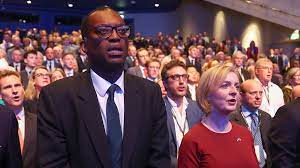
A tory vote 
Gives power to the oppressors,
Involuntary servitude
Permeates the air, 
They don't feel your pain 
You are a mere statistic. 
 
Today's  predicament
Is yesterdays corollary, 
Based on a premise
Of deceit and lies,
No intention to deliver
No standards to uphold.
 
Forcing financial violence
Upon desperate people,
Expected to remain submissive
Under sociopathic tendency,
Increasingly endangering society
With poverty and inequality. 
 
The tables need turning
The faceless to be seen,
Open the floodgates 
Of sense and reason,
To overcome the barriers
Of a cruel depraved regime.


Tuesday, 4 October 2022

Pierre Chrétien De Geyter Belgian socialist and composer of the revolutionary anthem, L'Internationale (October 4 1848 – 26 September 1932)


Pierre Chrétien De Geyter  Belgian socialist and composer, best known for writing the music of the revolutionary Internationale Socialist anthem The Internationale,was born 4th October 1848 on Kanunnik Street in Ghent, Belgium.
The living conditions of the Ghent working-class family in which Pierre De Geyter was born were far from rosy. Poverty, hunger, overpopulation and contagious diseases took their toll in the Flemish proletarian neighbourhoods in the middle of the 19th century. When to compound, the disastrous state of affairs the Flemish textile and metal industry was hit by crisis because of rapid industrial development, many breadwinners lost their job. Longing for better economic circumstances the De Geyter family, like many other Flemish textile workers, moved in 1855 to the North of France, which in that period was also known as ‘Petit Belgique’.
Both father and son found work there, despite child labour being outlawed since 1841. Pierre became a thread maker at Fives Locomotive Works. He learned to read and write at the workers' evening classes, taking drawing classes at Lille Academy and, from 1864, also music lessons. He even won first prize in woodwinds and played a number of instruments, including the saxophone! In 1887, Pierre became the conductor of La Lyre des Travailleurs, the socialist choir that met at the premises of La Liberté in the Rue de la Vignette, founded by Gustave Delory, who later became the Socialist mayor of Lille. Pierre joined the musical society of the French Workers' Party (POF) in Lille, which would march through the workers' neighbourhoods playing music during strikes,and election campaigns .
On 15 July 1888, Delory contacted De Geyter to compose music for several "Chants révolutionnaires" that were often sung at popular events with Lille socialists. He gave him a copy of the Chants Révolutionnaires poetry collection by Eugène Pottier. Within it it contained  The Internationale. The lyrics had been written by Eugène Edine Pottier during the "Semaine Sanglante" (the "bloody week," May 22–28, 1871) marking the brutal end and severe repression of the revolutionary Paris Commune of 1871https://teifidancer-teifidancer.blogspot.com/2021/03/150th-anniversary-of-paris-commune.html by the conservative French government in Versailles, cheered on by the ruling classes of the world. 
It took Pierre one Sunday morning to compose his music on a harmonium. According to one source, he then asked his brother Adolphe to play it on the bugle, and subsequently made some minor changes to the music. The rousing new composition was first played by the Lyre des Travailleurs at the yearly fête of the Lille trade union of newspaper sellers in July 1888.The song was a success and the workers’ party branch in Lille decided to print 6,000 flyers of the song.
To protect his job, only "Degeyter" was named as the composer but Pierre was dismissed regardless and was subsequently blacklisted by Lille employers.He encountered financial difficulties and moved to the Parisian suburb of Saint-Denis in 1901. He also became embroiled in painful legal proceedings with his younger brother Adolphe over his copyright, which was only settled in his favour in 1922. To make matters worse, Delory even took Adolphe's side during those proceedings.
 Pierre became a communist and his music was relegated to obscurity in France. He worked as a lamplighter for the township of Saint-Denis from then on. He was soon reduced to performing odd jobs, such as making coffins. In 1902, he left Lille with his wife and daughter and moved to Saint-Denis, near Paris and worked as a lamplighter for the township of Saint-Denis from then on.
The poem  preaching the unity of workers to conquer a free and common land and denouncing the system that covers up the crimes of the rich, was reproduced in other congresses of communist, socialist and workers’ parties and  took the world by storm.The Second International alliance of socialist organizations around the world--which created International Women's Day, for one thing--adopted the song as an official anthem. The Internationale was also incorporated as the official hymn by the Second International, founded in 1889.The Third International, formed after the Russian Revolution of 1917, carried on the tradition. "The Internationale" was the anthem of the USSR after the revolution, until it was dropped in favor of a more explicitly nationalist anthem during the Stalin era.
If the workers were quick to realise that The Internationale was a song that captured the essence of their conditions and aspirations, the authorities were equally quick to realise the threat it represented to status quo.
In 1894, a teacher by the name of Armand Gosselin released a new version of The Internationale and the government immediately put him on trial accused of encouraging military insubordination (verse five). He was sentenced to a term of imprisonment of one year. This attempt to suppress the song had exactly the opposite effect. The trial against Gosselin intensified the interest in the song. By now, nothing could stop The Internationale.
Pottier's words and Pierre De Geyters rousing militant anthem has since been  sung and honoured  by various Labour parties, anarchists, socialists, Trotskistes, Leninists, Communists and all those seeking a  radical, fundamental change in society, many who  have been jailed, even executed, for the mere singing of it.but it has continued to be translated into  hundreds of languages across the globe, with billions of covers on youtube alone. It has been hailed as the most dangerous song on the planet, a rousing song.of continuing universal struggle, the call to the final battle against the tyranny of the world.
A few years before De Geyter’s death an employee of the Soviet Embassy in Paris noticed that the composer of the Internationale was still alive (at that moment the Internationale was the national anthem of the Soviet Union). In 1927 De Geyter was invited as a guest of honour for the celebrations of the tenth anniversary of the October revolution. It is said that tears rolled down his cheeks while his anthem was played. The Soviet Union was also instrumental in providing De Geyter towards the end of his life with some amenities: he received a Russian state pension and the town of Saint-Denis offered him accommodation for free.
In addition to the Internationale De Geyter composed mainly light music and militant songs, a large part of which is conserved in the city library of Lille.
De Geyter died  on  26 September, 1932 in Saint-Denis followed by 50,000 people to the tune of The Internationale. There is a Pierre De Geyter street in Ghent and there are Pierre Degeyter squares both in Lille and in Sant-Denis. On the occasion of the 150th anniversary of his birth date, an exhibition about De Geyter was organized in 1998 by the Masereel Fund and the Archive and Museum of the Socialist Workers’ Movement (AMSAB) in Ghent. In 1999 he received late posthumous recognition by his native city, more specifically a bronze statue in the front yard of the Museum for Industrial Archaeology.
There is an eternal message in Pottier 's words and De Geyter;s song's that is still worth remembering. As bleak times lie ahead, however down- hearted you may feel right now, remember the international ideal unites the human race. De Greyter's  anthem's power to move people, continues to play a role in inspiring and reminding us to  keep standing in solidarity, against the injustices of the world and keep  singing out loud, as we struggle on in our attempt to build a better society.The following is the original song as Pottier wrote it

The Internationale Original  Verses

Debout, les damnés de la terre / Arise, damned of the earth
Debout, les forçats de la faim / Arise, prisoners of hunger
La raison tonne en son cratère, / Reason thunders in its volcano
C’est l’éruption de la fin / This is the eruption of the end
Du passé faisons table rase, / Lets make a clean slate of the past
Foule esclave, debout, debout, / Enslaved masses, arise, arise
Le monde va changer de base / The world is is going to change its foundation
Nous ne sommes rien, soyons tout / We are nothing, we will be all

Chorus:

C’est la lutte finale / This is the final struggle
Groupons-nous, et demain, / Group together, and tomorrow
L’Internationale, / The Internationale
Sera le genre humain. / Will be the human race
Il n’est pas de sauveurs suprêmes, / There are no supreme saviors
Ni Dieu, ni César, ni tribun, / Neither God, nor Caesar, nor tribune
Producteurs sauvons-nous nous-mêmes / Producers, let us save ourselves
Décrétons le salut commun / Decree the common salvation
Pour que le voleur rende gorge, / So that the thief expires
Pour tirer l’esprit du cachot, / To free the spirit from its cell
Soufflons nous-mêmes notre forge, / Let us fan the forge ourselves
Battons le fer tant qu’il est chaud / Strike while the iron’s hot

Chorus

L’État comprime et la loi triche, / The State oppresses and the law cheats
L’impôt saigne le malheureux; / Tax bleeds the unfortunate
Nul devoir ne s’impose au riche, / No duty is imposed on the rich
Le droit du pauvre est un mot creux. / The right of the poor is an empty phrase
C’est assez languir en tutelle, / Enough languishing in custody
L’égalité veut d’autres lois: / Equality wants other laws
«Pas de droits sans devoirs, dit-elle, / No rights without duties she says
Égaux, pas de devoirs sans droits!» / Equally, no duties without rights

Chorus

Hideux dans leur apothéose, / Hideous in their apotheosis
Les rois de la mine et du rail, / The kings of the mine and the rail
Ont-ils jamais fait autre chose, / Have they ever done anything
Que dévaliser le travail? / Than steal work?
Dans les coffres-forts de la bande, / Inside the strong-boxes of the gangs
Ce qu’il a créé s’est fondu. / What work has created is melted
En décrétant qu’on le lui rende, / By ordering that they give it back
Le peuple ne veut que son dû. / The people only want their due

Chorus

Les Rois nous saoulaient de fumées, / The kings made us drunk with fumes
Paix entre nous, guerre aux tyrans / Peace among us, war to the tyrants
Appliquons la grève aux armées, / Let the armies go on strike
Crosse en l’air et rompons les rangs / Stocks in the air, and break ranks
S’ils s’obstinent, ces cannibales, / If these cannibals insist
A faire de nous des héros, / On making heroes of us
Ils sauront bientôt que nos balles / They will know soon enough that our bullets
Sont pour nos propres généraux. / Are for our own generals

Chorus

Ouvriers, Paysans, nous sommes / Workers, peasants, we are
Le grand parti des travailleurs; / The great party of laborers
La terre n’appartient qu’aux hommes, / The earth belongs only to men
L’oisif ira loger ailleurs. / The idle will go reside elsewhere
Combien de nos chairs se repaissent / How much of our flesh have they consumed
Mais si les corbeaux, les vautours, / But if these ravens, these vultures
Un de ces matins disparaissent, / Disappear one of these days
Le soleil brillera toujours / The sun will shine forever
Chorus

The first verse and refrain of the American version goes like this:

Arise ye prisoners of starvation
Arise ye wretched of the earth
For justice thunders condemnation
A better world's in birth!

No more tradition's chains shall bind us
Arise, ye slaves, no more in thrall
The earth shall rise on new foundations
We have been naught we shall be all.

'Tis the final conflict
Let each stand in their place
The international working class
Shall free the human race.


The late Alistair Hulett was inspired to create the following.
 

Billy Bragg  recently rewrote the song in an attempt to remind us what we are still fighting for, Whether you like Bragg's music or not, there is a message at this song's core that is worth remembering. 


Monday, 3 October 2022

Truss off!

Sitting in darkness
Controlled by the few;
Walking through treacle
With toxicant glue.

With days getting colder
Jack Frost starts to bite,
No heating to counteract
With money so tight.

As Loopy and Krazy
Press self destruct,
The state of the country
Is totally fucked.

While Lizzie the lizard
Crawls on her belly,
Millions everywhere
Turn off the telly.

Truss the speaker
Robotic and dull,
Spouts vacuous claptrap
Of a birdbrained numbskull.

Takes from the needy
Gives to the rich,
Boundaries are alien
To this virulent bitch.

Kwarteng in his wisdom
Brings austerity to the poor,
Cuts taxes of the wealthy
As the pound hits the floor.

A lame opposition
So spineless and weak;
With ineffectual efforts
The future looks bleak.

Saturday, 1 October 2022

The Colours of Creation


Creation is fantastic
Like leaves blowing in wind 
Evident in music, painting
Writing or speaking 
Whistling its tune.

Every colour enables the rainbow
Each pivotal shade
Poised in splendour
Enriched by magic
Spellbound in stone.

As Cancer of austerity stalks
Leaving anger burning 
Senses and minds boiling
Prisoners of rotten malaise
Seek new vibration. 

Words that mold 
In poetic sequence
Channeling messages
In this catastrophic botch
Of hope and reparation.

Instrumental sounds
Surge the staves
Reaching a crescendo
Shaking the regime
Sending shockwaves through the nation. 

Wednesday, 28 September 2022

Remembering The Second Intifada


From the very first day that Israeli soldiers set foot on Palestine and started the occupation, the Palestinian people have fought that invasion and resisted the occupation.The word Intifada originates in the Arabic root “to shake,” and contextually means uprising. It entered the English dictionary on December 8 1987 with the eruption of the First Intifada in a refugee camp in the Gaza Strip when an Israeli settler identified as Herzel Boukiza rammed his vehicle into Palestinian workers returning home through Erez/Beit Hanoun checkpoint between Israel and Gaza. Four workers from Jabalya and Maghazi in the Gaza Strip were killed in the terror attack. Protests and violence erupted; only to end in 1993 with the signature of the Oslo Accords.The word Intifada has since  become synonymous with the Palestinian unarmed rebellion against Israel’s occupation.
The Second Intifada, also known as the Al-Aqsa Intifada, lasted from 28 September 2000 to 8 February 2005. This second mass resistance movement against the Israeli occupation was sparked by then-candidate for Prime Minister Ariel Sharon’s  and his right wing Likud party delegation, stormed the Al Aqsa mosque with thousands of troops deployed in and around the Old City of Jerusalem, Al Quds. therefore violating the terms of the status quo in Jerusalem.  According to the historical arrangement governing the site, which both Jews and Muslims recognize as sacred to their traditions, the compound is administered by the Islamic Waqf. By storming the compound and entering al-Aqsa Mosque with his supporters under heavy military escort, Sharon was signaling that Israel had total control of the site and could disregard centuries-old arrangements between Muslims and Jews.
Sharon's visit was condemned by the Palestinians as a provocation as well as an incursion since his bodyguards were armed. Shortly after Sharon left the site, angry demonstrations by Palestinians erupted outside the compound. The broader context behind the uprising was the failure of the US-based Camp David negotiations between PM Ehud Barak and Yassir Arafat.
What began as a few hundred protesters throwing shoes at Sharon's police escort following prayers at al-Aqsa mosque had within hours erupted into demonstrations across the Palestinian territories, with chants of "we want an intifada". The following day, September 29,in a extremely harsh reaction. Israeli forces opened fire on crowds of unarmed demonstrators in al-Aqsa compound, killing seven and wounding more than 100. "People are being massacred! Bring the ambulances," echoed from the mosque's loudspeakers. Demonstrations raged throughout the West Bank and Gaza. Israeli forces repeatedly met the stone-throwing crowds with live ammunition.In Gaza, a French broadcast crew captured footage of a boy called Mohammed al-Durrahhttps://teifidancer-teifidancer.blogspot.com/2013/09/in-memory-of-mohammed-al-durrrah.html being shot repeatedly by Israeli forces as he clung to his father. Moments later, a paramedic from the Palestinian Red Crescent Society was killed as he attempted to treat the boy and his father.The scene assumed iconic status as it was shown around the world demonstrating Israel's blatant violence against Palestinians.
Inside the Green Line, too, riots took hold in Palestinian communities, with 13 Palestinian citizens of Israel killed in the first days of protests As the intensity of the demonstrations increased, so too did international and human rights groups' condemnation of Israel's violent attempts to suppress what was quickly becoming an uprising. 
Malka, the head of Israeli military intelligence at the time, said that Israeli forces fired more than 1,300,000 bullets in the territories in the first month alone."This is a strategic figure that says that our soldiers are shooting and shooting and shooting," Malka said about what amounted to some 40,000 rounds a day.""The significance is that we are determining the height of the flames."
Palestinian stone-throwers were met with Israeli snipers; gunmen, with helicopter gunships and tanks. 
Whereas the first intifada (1987-1992) was defined by popular protest, general strikes and stones - and to be sure, harsh Israeli counter-measures, including the infamous order by Yitzhak Rabin to break the bones of stone-throwing Palestinians - it was immediately clear that this new uprising was different. Demonstrations were being met with overwhelming force by Israel and it made popular protest impossible. Some analysts point to this overwhelming force by Israeli forces as the reason why the phase of popular protest in the Intifada ended quickly, and armed resistance took its place.
In February 2001, the Israeli public backed the strategy when General Sharon was elected prime minister. While suicide attacks came to define the Palestinian armed struggle, these operations did not begin in earnest until more than a year into the uprising, and after the deaths of more than 400 Palestinians. Against a heavily armed and armored Israeli force, the kind of guerrilla warfare that the Palestinians had access to - namely, ambushes, shooting attacks and defensive armed struggle - was strictly limited and of marginal impact. While Hamas and Islamic Jihad carried out the most attacks, all factions were involved - including secular elements of Fatah's al-Aqsa Brigades and the leftist PFLP.
The Second Intifada also had a prominent unarmed character that was largely overlooked by mainstream media, with local Palestinian communities organizing predominantly nonviolent actions to combat the expropriation of Palestinian land by Israeli settlements and the illegal Separation Barrier; Israeli and international civilians were also involved in many of these actions
Israel's campaign to suppress the uprising took a heavy toll on ordinary Palestinians.During the Al Aqsa Intifada, Israel caused unprecedented damage to the Palestinian economy and infrastructure. Israel reoccupied areas governed by the Palestinian Authority and began construction of its separation wall.
Significantly, the Palestinian leadership was also decimated by a concerted campaign of assassination.While some assassinations were ambushes by undercover Israeli units, helicopters increasingly became a fixture of Israeli attacks.Helicopter gunships and anti-tank missiles were used on cars, offices and homes.They hovered over Palestinian cities and refugee camps. Avi Dichter, Israel's internal security chief during the intifada, characterized the policy by stating simply: "When a Palestinian child draws a picture of the sky, he doesn't draw it without a helicopter."
Between November 2000 and September 2004, Israel carried out at least 273 assassinations, according to data compiled by the Institute for Palestine Studies.High profile assassinations included Abu Ali Mustafa, the general secretary of the PFLP, in 2001, and the top Hamas leaders and founders, Sheikh Ahmed Yassin and Abdel Aziz Rantissi, in 2004.
Perhaps most notoriously, in July 2002, Israeli warplanes dropped a 2,000-pound bomb on a Gaza apartment building that housed Izz ad-Din al-Qassam Brigades commander Salah Shehade and his family. The Hamas founder was killed along with 15 others, including his wife and nine children. The Shehade assassination led to notable criticism, even within Israel, where it inspired the so-called "pilots' letter" - a declaration by several Israeli air force pilots refusing to carry out bombing raids over the occupied territory. The then leader of the Palestinian Liberation Orgnisation (PLO) Yasser Arafat’s headquarters was also demolished and besieged by Israeli forces. 
In what is perhaps the defining moment of the Intifada, in the Jenin refugee camp, Palestinian fighters held off the Israeli offensive of more than 1,000 soldiers during several days of fierce fighting to effectively enter the camp with ground troops, Israel responded by bombing the camp with helicopters and warplanes, shelling it with tanks, and ultimately bulldozing a massive section of the camp - leaving 4,000 homeless according to Human Rights Watch. In 10 days, 52 Palestinians and 23 Israeli soldiers were killed in what became known as the Battle of Jenin.
In April 2002, Israel invaded the West Bank en masse in an operation titled "Defensive Shield", and reoccupied Palestinian cities and towns in the largest military offensive in Palestinian territory since 1967. According to a report by the UN secretary general, 500 Palestinians were killed and more than 6,000 were arrested during the campaign.  
Unlike the First Intifada, which ended at the signing of the Oslo Accords  there is no clear ending date to the Second Intifada. Some claim the uprising ended with Yasser Arafat's death in November 2004, while others say it culminated with a truce signed in February 2005 between Abbas and Sharon, then-Prime Minister of Israel, in Sharm al-Shaikh, Egypt where it.was agreed to the resumption of talks to reach the so called “two state solution”.
Sharon also agreed to release 900 of the 7500 Palestinian prisoners being held at the time and to withdraw from West Bank towns that had been reoccupied during the Intifada. Israel, however, never fulfilled its end of the bargain, which comes as no surprise. 
Two days later, Hamas contested the ceasefire and fired rockets at an illegal settlement near the Gaza Strip. The move prompted Abbas to sack senior security officials within the group, causing tension within Palestinian factions.
The rift grew the following year when Hamas triumphed over Fatah in elections. Ongoing disputes between the groups often led to violent confrontations and in 2007 Hamas eventually asserted control over the Gaza Strip, leaving Fatah to retreat to the West Bank. The divide has endured for over 10 years despite attempts to reconcile, leaving Palestinians frustrated at their state of political limbo. The factions mean the Palestinian territories are divided between two rival powers, and reconciliation attempts have so far failed although recently Hamas and Fatah appear united by their opposition to Arab-Israeli normalisation deals.
The Intifada was, and still is, an expression of a deep disappointment and frustr.ation over the ongoing disrespect and denial of basic rights for Palestinians caused by the occupation – including the right to free access to Jerusalem, security and development, and the refugees’ right to return.
Whilst Palestinians made some material gains as a result of the intifada, after the ceasefire Israeli aggression intensified and human rights violations increased. The peace process was stalled for many years as Israel vehemently opposed a two-state solution.The settler community have also been emboldened, with greater construction and government support for illegal settlement activity.
Palestinians who grew up in the shadow of the uprising, a not to distant memory, sadly find themselves surrounded by physical and political barriers with little hope for the future. The Israeli military controls 60 percent of the West Bank, and in Gaza, Palestinians are facing considerably worse conditions, with the Israeli blockade leading to perennial power cuts, a lack of clean water, and a youth unemployment rate hitting 65 percent, according to World Bank data leaving .many Palestinians lamenting how the occupation has been normalised over the decades following the unrealised Oslo accords.
The current situation in the occupied territories and Jerusalem, is in many ways reminiscent of the period leading up to the Second Intifada. At the time, continued settlement expansion and the failure of the talks at Camp David in the summer of 2000, to finalize implementation of the 1995 Oslo Accords, originally drawn up as interim agreements has reinforced Palestinian public disillusion with the so-called peace process who have also seen that real peace is not a priority for Israel, nor is ending the conflict with the Palestinians. Israel has to be compelled to make peace a priority, because today the West Bank, which has been under Israeli military occupation since 1967, is simmering.
Stationed throughout the West Bank, Israeli soldiers, police and private security firms protect settler populations that the international community consider illegal  at the expense of Palestinian civilians. In this hyper-militarized environment, Palestinian children have face disproportionate physical violence, restricted access to education, and psychological trauma. 
Between the near-nightly Israeli raids, the clashes, the ensuing deaths, arrests and the ongoing animosity between Al Fatah and Hamas in Palestine, and the hawks and doves in Israel, it all continues to make dialogue difficult and peace a permanent mirage and because of this, there are fears it could soon boil over into a third Intifada, or popular uprising that would include all forms or means of struggle against the ongoing Israeli occupation. Where there is oppression resistance will thrive.

Sunday, 25 September 2022

Remembering the Radical Abstract Expressionist Artist Mark Rothko ( September 25, 1903 – February 25, 1970)


Mark Rothko ( Marcus Rothkowitz ) abstract expressionist artist and anarchist was born in  the working-class, Jewish town of  Dvinsk, now known as Daugavpils, Latvia on the 25th of September 1903, the fourth child born to Jacob and Anna Rothkovich. As Russia was a hostile environment for Zionist Jews, Jacob immigrated to the United States with his two older sons in 1910, finally sending for the rest of his family in 1913. They settled in Portland, Oregon. His father  was a pharmacist of modest means who believed strongly in a secular and political education for his children. The youngest of four siblings, Rothko was the only one to study the Talmud in a family long affected by fear of their homeland’s anti-Semitism. 
Jacob passed away of  cancer shortly after their immigration to the United States, leaving them without means for support. Only 10 years old at the time, his fathers untimely death a year later shook him badly, but Rothko continued his studies at school, and  was forced to take jobs in his uncle’s warehouse to help his mother, Sonia, make ends meet.. It resulted in a lingering sense of bitterness over his lost childhood. This tragedy was the first in a series of the events that would torture the soul of a sensitive and emotional artist throughout life.
Among the workers, though  he became a passionate proponent of labor rights and revolutionary politics. Portland at the time was the epicentre of revolutionary activity in the US at the time, and the area where the revolutionary syndicalist union the Industrial Workers of the World, was strongest. Marcus, having grown up around radical workers' meetings, attended meetings of the IWW and with other anarchists like Bill Haywood and Emma Goldman, where he developed strong oratorical skills he would later use in defence of Surrealism.
 He graduated early from Lincoln High School, showing more interest in music than visual art. He was awarded a scholarship to Yale University, but soon found the environment at Yale conservative. racist and elitist. As the U.S.’s entry into World War I encouraged a push for immigrants to assimilate and the Bolshevik Revolution (which his family supported) brought on the first Red Scare, Rothko promoted free expression by introducing a letters-to-the-editor column in his high school newspaper. While attending Yale he and a couple of friends founded the publication the Saturday Evening Pest, which promised to critique “international politics, capitalism, socialism, immigration, and poverty.”  He left the university without graduating in 1923, and did not return until he was awarded an honorary degree forty-six years later.
 He spoke four languages- Russian, Yiddish, Hebrew, and English, and experienced many cultures which greatly enriched his art. After leaving Yale, Mark Rothko made his way to New York City, as he put it, "to bum about and starve a bit." He studied in the Parsons New School for Design, where one of his instructors was the artist Arshile Gorky, American avant-garde painter of Armenian origin. Over the next few years, he had taken odd jobs before he enrolled at early American Cubist painter Max Weber's still life and figure drawing classes at the Art Students League. A highly criticized figure in the art world, Weber was likewise a Russian Jew who taught the philosophies and methods of Modernism’s major movements. Rothko in particular admired the work of Expressionists Henri Matisse and Milton Avery, and his early paintings emulated their abstracted figurative styles with flat areas of color. It was also under Weber that Rothko began to consider his art as a means of religious and emotional expression.  According to Rothko, this was the beginning of his life as an artist. Rothko's early works were mostly portraits, nudes, and images of urban scenes.
In 1932, he married jewellery designer Edith Sachar, but separated from her in the summer of 1937. They reconciled several months later, yet their relationship remained tense
By the mid-1930s, the effects of the Great Depression were being felt throughout American society, and Rothko had become concerned with the social and political implications of mass unemployment. Working in the Easel Division of the Works Progress Administration, Rothko met many other artists, yet he felt most at ease with a group that consisted mainly of other Russian Jewish painters. This group, which included such figures as Adolph Gottlieb, Joseph Solman and John Graham, showed together at Gallery Secession in 1934, and became known as "The Ten". They sought to communicate human emotion and drama through their paintings.
In the 1930s, Rothko continued to explore different styles and methods. His Subway series depicted the underground subway environments of New York City in a melancholy palette. Although realistic and immediately recognizable with figures throughout, the series emphasized the architectural spaces as abstract compositional arrangements, a key concept he would later develop in his mature work. 
On February 21, 1938, Rothko finally became a citizen of the United States, prompted by fears that the growing Nazi influence in Europe might provoke sudden deportation of American Jews. Concerned about anti-Semitism in America and Europe, Rothko in 1940 abbreviated his name from "Marcus Rothkowitz" to "Mark Rothko." The name "Roth," a common abbreviation, was still identifiably Jewish, so he settled upon "Rothko."
As World War II took hold of American life, Rothko and his fellow artists began to depart from representational work in favor of the symbolism of Surrealism. He became a passionate advocate for the style, stating that, “A time came when none of us could use the figure without mutilating it.” Fearing that modern American painting had reached a conceptual dead end, Rothko was intent upon exploring subjects other than urban and nature scenes. He sought subjects that would complement his growing interest with form, space, and colour. The world crisis of war lent this search an immediacy because he insisted that the new subject matter have a social impact, yet be able to transcend the confines of current political symbols and values. 
In his essay, "The Romantics Were Prompted," published in 1949, Rothko argued that the "archaic artist ... found it necessary to create a group of intermediaries, monsters, hybrids, gods and demigods" in much the same way that modern man found intermediaries in Fascism and the Communist Party. For Rothko, "without monsters and gods, art cannot enact a drama.
The tragedy of World War II seems to have had the irreversible consequences for the fragile psyche of the artist. His dream (not destined to be realized) would be to paint a series of canvases for the museum dedicated to the Holocaust. Throughout his life, in most of his works, he sought to express the depth of despair and horror before the deeds of the humanity.
On June 13, 1943, Rothko and Sachar separated again. Rothko suffered a long depression following their divorce. Thinking that a change of scenery might help, Rothko returned to Portland. From there he travelled to Berkeley, where he met artist Clifford Still, and the two began a close relationship. Still's deeply abstract paintings would be of considerable influence on Rothko's later works.
In the autumn of 1943, Rothko returned to New York, where he met noted collector and art dealer Peggy Guggenheim, who was initially reluctant to take on his work. Rothko’s one-man show at Guggenheim's The Art of This Century Gallery in late 1945 resulted in few sales (prices ranging from $150 to $750) and in less-than-favourable reviews. During this period, Rothko had been stimulated by Still's abstract landscapes of colour, and his style shifted away from surrealism. Rothko's experiments in interpreting he unconscious symbolism of everyday forms had run their course. His future lay with abstraction.
Rothko's 1945 masterpiece, Slow Swirl at the Edge of the Sea, illustrates his newfound propensity towards abstraction. It has been interpreted as a meditation on Rothko's courtship of his second wife, Mary Ellen "Mell " Beistle, whom he met in 1944 and married in the spring of 1945. The painting presents, in subtle grays and browns, two human-like forms embraced in a swirling, floating atmosphere of shapes and colours. The rigid rectangular background foreshadows Rothko's later experiments in pure colour. The painting was completed, not coincidentally, in the year the Second World War ended.


 He and Mary had two children, one of whom would later publish a book Rothko had written called The Artist's Reality. It is believed the book was written in the 1940s when Rothko took a break from painting and read a lot of mythology and also existentialist works by German philosopher Friedrich Nietzche.
By the beginning of the 1950s, his signature style, ragged rectangular forms on the colored fields, which employed shimmering color to convey a sense of spirituality. Rothko's art is distinguished by a rare degree of sustained concentration on pure pictorial properties such as color, surface, proportion, and scale, accompanied by the conviction that those elements could disclose the presence of a high philosophical truth. Visual elements such as luminosity, darkness, broad space, and the contrast of colors have been linked, by the artist himself as well as other commentators, to profound themes such as tragedy, ecstasy, and the sublime. Rothko, however, generally avoided explaining the content of his work, believing that the abstract image could directly represent the fundamental nature of "human drama." 
His works began to be in great demand, putting Rothko in the top ten of the most highly paid artists of his time.For the next 20 years of his life, Rothko would work in this groundbreaking format,exploring  colours in all its depths and hues,,developing a new language of feeling, exploring freedom and movement. achieving an impressive range of emotion and mood. The massive scale of the paintings intentionally envelops the viewer, creating a feeling of intimacy. Rothko hung the paintings close to the floor in groups, with low lighting, and required that no other art works be shown in proximity. The effect is quietly meditative, for many inviting spiritual contemplation. One of his foremost collectors, Dominque de Menil, summed up this late work by saying the paintings, “…evoke the tragic mystery of our perishable condition. The silence of God. The unbearable silence of God.”
Rothko said that his paintings were large in order to make the viewer part of the experience rather than separate from the painting. In fact, he preferred to have his paintings shown together in an exhibit in order to create a greater impact of being contained or enveloped by the paintings, rather than broken up by other artworks. He said that the paintings were monumental not to be "grandiose", but in fact, to be more "intimate and human."
In 1960 the Phillips Gallery built a special room dedicated to displaying Mark Rothko's painting, called The Rothko Room. It contains four paintings by the artist, one painting on each wall of a small room, giving the space a meditative quality.  
In 1961, Rothko was given  major retrospective exhibition at the Museum of Modern Art in New York. After years of teaching art to subsidise his paintings, this show finally brought him the success he deserved.
Rothko was then commissioned in 1964 by John and Dominique de Menial to create a meditative space filled with his paintings created specifically for the space. The Rothko Chapel, designed in collaboration with architects Philip Johnson, Howard Barnstone, and Eugene Aubry, was ultimately completed in 1971, although Rothko died in 1970 so did not see the final building. It is an irregular octagonal brick building that holds fourteen of Rothko's mural paintings. The paintings are Rothko's signature floating rectangles, although they are darkly hued - seven canvases with hard-edged black rectangles on maroon ground, and seven purple tonal paintings.
It is an interfaith chapel that people visit from all over the world. According to The Rothko Chapel website,"The Rothko Chapel is a spiritual space, a forum for world leaders, a place for solitude and gathering. It’s an epicenter for civil rights activists, a quiet disruption, a stillness that moves. It’s a destination for the 90,000 people of all faiths who visit each year from all parts of the world. It is the home of the Óscar Romero Award."


Mark Rothko supported the social revolutionary ideas of his youth throughout his life. In particular, he was all for the artists' total freedom of expression, which was compromised by the market, as he felt it. This belief often put him at odds with the art world establishment, leading him to publicly respond to critics and occasionally refuse the commissions, sales and exhibitions. As a mature painter, Rothko signed an open letter with eighteen other artists (collectively called the “Irascibles”) to Roland L. Redmond, the president of the Metropolitan Museum of Art in New York City, protesting against the museum’s forthcoming exhibition “American Painters, 1900–50,” which favoured figural work to the Abstract Expressionist art then prevalent in the city. In 1959 he reportedly scrapped a commission by the Four Seasons because he didn’t want his work hanging in the hotel’s outrageously expensive restaurant.
 Later in life with the death of the Russian Revolution, the destruction of the Spanish Revolution by Communists and Fascists, and the rise of the Nazis Rothko became disillusioned as to whether there was any hope for social change. But he claimed "I am still an anarchist"!

Rothko was both fortified by his powerful Jewish heritage, a heritage which is one of the oldest, most tenacious and demanding to be found anywhere - one embodying a collective superego and an ethic of cosmic proportion. Rothko himself did not actually adhere to any particular religious faith, but to me his work remains  very mystical imbued with so many layers of meaning.
In 1968, Rothko suffered an aortic aneurysm, this brush with death would shadow him for the rest of his life. Despite his fame, Rothko felt a growing personal seclusion and a sense of being misunderstood as an artist. He feared that people purchased his paintings simply out of fashion and that the true purpose of his work was not being grasped by collectors, critics, or audiences. He wanted his paintings to move beyond abstraction, as well as beyond classical art. For Rothko, the paintings were objects that possessed their own form and potential, and therefore, must be encountered as such. Sensing the futility of words in describing this decidedly non-verbal aspect of his work, Rothko abandoned all attempts at responding to those who inquired after its meaning and purpose, stating finally that silence is 
 
"so accurate." "My paintings' surfaces are expansive and push outward in all directions, or their surfaces contract and rush inward in all directions. Between these two poles, you can find everything I want to say."
 
Rothko began to insist that he was not an abstractionist and that such a description was as inaccurate as labeling him a great colourist. His interest was

l“ only in expressing basic human emotions — tragedy, ecstasy, doom, and so on. And the fact that a lot of people break down and cry when confronted with my pictures shows that I can communicate those basic human emotions . . . The people who weep before my pictures are having the same religious experience I had when I painted them. And if you, as you say, are moved only by their colour relationship, then you miss the point.

Ignoring doctor's orders, Rothko continued to drink and smoke heavily, avoided exercise, and maintained an unhealthy diet. "Highly nervous, thin, restless" was his friend Dore Ashton's description of him at this time. However, he did follow the medical advice given not to paint pictures larger than a yard in height and turned his attention to smaller, less physically strenuous formats, including acrylics on paper.
Meanwhile, Rothko's marriage had become increasingly troubled, and his poor health and impotence resulting from the aneurysm compounded his feeling of estrangement in the relationship. Rothko and his wife Mell separated on New Year's Day 1969, and he moved into his studio.
Despite the phenomenal demand for his art within his lifetime, the artist was haunted by depression, poor health and alcohol addictions and likely an undiagnosed bipolar disorder. On February 25, 1970, after being unable  to recover from this  phase of deep sadness, Oliver Steindecker, Rothko's assistant, found the artist in his kitchen, lying dead on the floor in front of the sink, covered in blood. He had sliced his arms with a razor found lying at his side. The autopsy revealed that he had also overdosed on anti-depressants. He was sixty-six years old.  
 
 
He had in his possession nearly 800 paintings  yet within months of the funeral, his three trusted friends, acting as executors, relinquished his entire legacy of paintings to the powerful, international Marlborough Galleries (run by Frank Lloyd) for a fraction of their real worth on terms suspiciously unfavourable to the estate. The suit that Rothko’s daughter brought against the executors and Marlborough rocked the art world with its shocking revelations of corruption in the international art trade: from the deceptions practiced on Rothko when he was alive to the scandals after his death involving conspiracies and cover-ups, double dealings and betrayals, missing paintings and manipulated markets, phony sales and laundered profits, forgery and fraud.
After a long court case his works were divided between his two children and the Mark Rothko Foundation .In 1984, the foundation’s paintings were donated to 19 museums in the United States, Great Britain, the Netherlands, Denmark, and Israel. The largest and best portion of these went to the National Gallery of Art in Washington, D.C. A collection of murals originally commissioned for the Seagram Building in New York City is held by the Tate in London. Rothko's grave at East Marion Cemetery, East Marion, New York..

Painting consumed Rothko’s life, and although he did not receive the attention he felt his work deserved in his own troubled lifetime, his fame has increased dramatically in the years following his death. At odds with the more formally rigorous artists among the Abstract Expressionists, Rothko nevertheless explored the compositional potential of colour and form on the human psyche.
While his work is greatly admired by many, and is remembered as a boundary-breaking pioneer of 20th-century art. his detractors either view his attempts at expressing the sublime as over ambitious or see his paintings as boring  and unimpressive. Personally I was once fortunate to go and  see an exhibition of his work in the Tate and standing before his huge, mute abstract canvasses was drawn into an experience that required no real knowledge of the aesthetics of art - to something quite transcendent, and to feel, if only momentarily, something of the sublime spirituality he relentlessly sought to evoke.it was pretty powerful stuff !  His work remains forever intimate and timeless.

Thursday, 22 September 2022

The Awen of Twilight ( A Poem for the Autumn Equinox)


September 22, marks the Autumn Equinox The equinox occurs at the same moment worldwide. it is the official start of Autumn. In ancient times it was celebrated as a time of balance when day and night are equal.  Regardless of your faith, politics, or place it’s just a good time to reflect on balance in your life. 
Equinox comes from Latin aequus, meaning “equal,”and it is at this exact moment that day and  night are equal in length, but from now on the nights will start to become longer as the dark half of the year unveils its secrets on the journey through the wheel of the year and the cycle of the natural world moves towards completion.
In Welsh lore, the god Mabon was the son of the earth mother goddess, Modron. Mabon celebrates the autumn equinox and is a time of honouring the spirit world, the changing seasons and celebrating the second harvest.
 The 'Harvest Moon' and "Hunter's Moon, are also associated with the autumnal equinox.The former is the full moon closest to the equinox and the later the one following it. 
The Celts do not seem to have had a specific name for this time of year, but it has become widely known recently as Mabon, named after the character from the mabinogian, Mabon ap Modron. 
Mabon Ap Modron was stolen from his mother when he was only 3 days old and kept hidden for many years.  
His rescue becomes the task for King Arthur’s adopted brother, Cei and Gwrhyr, a translator of animal languages.They seek out a Blackbird, a Stag, an Owl and an Eagle, each older and wiser than the previous until they encounter the enormous salmon of Llyn Llyw, who carries them to Mabon's prison in Gloucester.  King Arthur then mounts an attack, allowing Cei to enter the rear of the prison and rescue Mabon.
Mabon is the second of the three Pagan harvest festivals which include Lammas, Lughnasadh and Samhain. Lughnasadh, marks the start of autumn in the Celtic year,  and is  named after god Lugh "of the long arm"; warrior, king, master craftsman & saviour! Skilled in multiple disciplines, including arts. Storm god and sometimes sun god. 
Often rituals giving thanks for a plentiful harvest and recognises the need to share the Earth’s fruits in the coming winter months were performed at this time. Have a blessed Mabon /Autumn Equinox, I offer you the following poem. 

The Awen of Twilight
 
There is a chill on this magical day
As I watch golden leaves, tumbling from the air,
The world so simple among autumn's splendour
Light and dark equal for all to share.
 
A point of sacred balance we can feel
Moments of understanding, time not to fear,
Releasing specks of joy, instead of sorrow 
Mother Earth calling, Mabon returning.
 
A time for focusing on life, death and rebirth 
To consider where we are and where we need to be,
As we honour those past, hold on firm to the present 
The seeds of life that never fade away.
 
While wild winds whistle out our number
Nothing is ever wasted with Dame nature,
As she shapes and colors shifting mood
Embrace her untamed rippling allure.

Among dancing spirits and earthly aroma
Intimately connected, retaining vigour,
Lets harvest hope, trust the changing seasons
Be grateful to all you hold dear.
 
While darker days approach ahead
Illuminate the paths you tread with reason,
Release the years frustrations and disappointments
So we can step over the threshold with trustful intention.
 
Acknowledging the great powers around us
Within us too, keeping us safe and well,
Respecting all the cycles of life
Surrender in awakening, appease the gods.

May our blessings be rich and  bountiful
Granting us peace, embers of warmth and protection,
Enchanting, keeping us believing, sharing dreams
As we wait for Spring's flowers to raise from slumber.