The original sculpture of "The Knotted Gun" also known as “Non Violence”
was created by Swedish artist Carl Fredrik Reuterswärd, a friend of John
Lennon. Reuterswärd created this piece of art after Lennon was fatally shot in the archway of the Dakota, his residence in New York City on December 8, 1980,.
The perpetrator Mark Chapman a huge fan of Lennons used a ;38 gun to shoot the music icon four times..
Only six hiours before he died, Lennon had met Lennon who signd a copy of the album Double Fantasy for him.
Lennon was pronouved dead when he arrived at the Roosevelt hospital. He was 40,
Chapman pleeaded guilry to his crime and was sentenced to life in prison,
Mark Chapman, who is said to be deepy religious, was a huge Beatles fan who greatly admired John Lennon. However his idolisatiin turned sour, irked by a famous Lennon quip, about the Beatles being "more popular than Jesus" claiming it was blasphemy. Having recently has a religious convrsion prior to his deision to kill the musician, religion and belief was the motive behind the murder,
Chapman is reported to have planned to kill Lennon, three months before he carried out his crime.He was sentenced to life imprisonment.
Recently, during his 2020 parole hearing Chpman said he kiled Lennon for "self glory" He called his act "despicable" and said he deserved the death penalty. He also told the parole board at his correctional facility in New Yorj that he was "sorry"
As the news that Lennon had been senselessly gunned down in cold blood, rolled out across the world, there was a worldwide outpouring of grief that ensued on an unprecedented scale, that continues to inspire grief and anger to this day,.
Lennon is remmbered for his vision of peace and at the time of his death was one of the most public advocates for peace and non-violence. In many of his songs his lyrics focussed on the vision of a world without violence.
“Imagine all the people
Livin' life in peace
You may say I'm a dreamer But I'm not the only one I hope someday you'll join us And the world will be as one "
Carl Fredrik Reuterswärd was deeply moved by the murder of his friend and, both as a
tribute to John Lennon and as a protest against other outbursts of unnecessary violence, he produced his most iconic work as he wanted to honor the singer’s vision of a peaceful
world,
“My first sketches in
three dimensions were rather rough and simple, but the important thing
was that the idea of the knotted barrel was with me from the very
start,” he said.
It is a sculpture in bronze, symbolizing a Colt Python 357 Magnum
revolver, which pipe points upwards. The gun is cocked, but the knot makes it clear that it will not shoot.In a direct and
uncompromisingly manner he managed to turn an object, traditionally used
for attack, into a symbol with a universal and
clear message of non-violence and peace, and not coincidentally, transformed a symbol of aggreive male sexuality into one of impotence.
Initially, "Non-Violence" was installed at the Strawberry Fields
memorial in Central Park, across the street from the home that Lennon
shared with Yoko Ono. In 1988, it was acquired and donated by the
government of Luxembourg to the United Nations headquarters in New York,
outside which it now stands.
According to Kofi Annan, who was the 7th Secretary-General of the United Nations at the time :
" The Non-Violence Symbol has not only endowed the United Nations with a
cherished work of art; it has enriched the consciousness of humanity
with a powerful symbol. It is a symbol that encapsulates, in a few
simple curves, the greatest prayer of man: that which asks not for
victory, but for peace"
.
Inside the U.N. building is a mosaic representing all the nations of
the Earth, accompanied by Jesus’ words, “Do unto others what you would
have others do unto you.” For many seasoned peace campaigners, this prayer was partly answered when the Arms Trade Treaty became international law on 24 December 2014,
Any state that is a party to the treaty must obey strict rules on
international arms transfers. The Treaty was designed to stop deadly
weapons from getting into the hands of people who will use them to
commit human rights violations, including genocide, crimes against
humanity and war crimes.The
treaty seeks to regulate the international trade in conventional arms,
from small arms to tanks, combat aircraft, and warships. It aims to
foster peace and security by putting a stop to the destabilizing flow of
arms to conflict regions.
More than 100 countries have joined the Treaty, and there are over 30
more who have signed the treaty which is the first step towards
becoming a party to the ATT.
The Treaty can help save lives, but only if it is properly implemented, and if states are held accountable when they breach it.
Yet every year corporate actors still supply large volumes of military
equipment to some of the most violent and unstable parts of the world.
This equipment is often used unlawfully in the context of armed
conflicts and in political unrest marred by serious human rights
violations.
The ATT treaty help at least a bit in addressing and halting
the uncontrolled flow of arms and ammunition that fuels wars, prolongs conflict, atrocities and human rights abuses. The devastating humanitarian consequences
of war fueled in part by the irresponsible
export of arms, underline just how urgently this treaty is needed.
Sadly the global arms trading is still on the rise and continues to fuel
human rights abuses. This is because some of the largest arms exporters
like Russia and the USA have not ratified the treaty. And even countries
that have ratified the treaty fail to comply with it, and transfer
weapons and munitions to places where they risk being used to commit
serious violations of international humanitarian law, including possible
war crimes.
Civilians typically bear the brunt of modern conflict. Weapons such
as artillery, mortars, guided bombs and missiles destroy hospitals,
homes, markets and transport systems, pushing survivors into poverty.
People’s lives are destroyed. This is the cost of an unregulated arms
trade industry.Irresponsible arms trading affects those living inside and outside areas of armed conflict and political instability.
Gun violence remains a daily tragedy that impacts people around the world, the vast majority
of whom are not living in conflict zones. the statistics are frightening. Globally twelve billion bullets are produced every year. That is almost enough to kill everyone in the world twice.There are more than 875 million firearms in the world, 75 per cent of them in the hands of civilians. Guns outnumber passenger vehicles by 253 million, or 29 per cent. Each year about eight million new small arms, plus 10 to 15 billion rounds of ammunition are manufactured, enough bullets to shoot every person in the world not once, but twice Every day, thousands of people are killed, injured and forced to flee their homes because of gun violence and armed conflict.
Since
1993, the ever so powerful Knotted Gun sculpture has been the symbol of the non profit Non-Violence Project
(NVPF), which was founded by two Swedes :Rold Skolebrand and Jan Helleman. Friends since childhood, they caw the unacceptable increase in violence around the world and decided to do something inspiring and constructive to reach the hearts of the next generation.
They embarked on a journey that took them deep into the roots of violent behaviour, A journey that made them realise that education is the only tool that works. The projects mission is to inspire,
motivate, and engage young people in understanding how to solve conflicts
without resorting to violence.
It holds violence prevention and nonviolence education programs for schools and sports clubs around the world.
Its logo is Reuterswärd's sculpture, It has educated eight million students,
teachers, and sports coaches with programs covering three main subjects:
conflict management, self-esteem building, and nonviolence.
Sir Paul McCartney, Ringo Starr, and Yoko Ono are, among others, ambassadors of the Non-Violence Project.
Reuterswärd wrote later that humor was the finest instrument to bring
people together. While making his peace symbol, he thought of adding a
touch of humor to make his “weapon” symbolically ridiculous and
completely out of orderl
Until his death from pneumonia, age 81, in May 2016, he was one
of Sweden's most famous artists, as well as a respected author. He
studied with Fernand Léger in Paris 1951 and was a professor of painting
at the Academy of Fine Arts in Stockholm between 1965 and 1969. In 1986
he was awarded the Prince Eugen Medal for painting,
Since his iconic
bronze sculpture exhibited in front of the United Nations, it has been adopted by various causes
around the world.and replicas have
been placed in more than 30 strategic locations around the world: Here a list of a number of them.
Unites States (Original) – New York City – Headquarters of the United Nations
Luxembourg – Kirchberg – Parc Central
China – Beijing -Chaoyang Park
Germany- Berlin – at the parc of the federal chancellery. It was unveiled in 2005 by
chancellor Gerhard Schroeder, who received it from Reuterswärd in
recognition of his Iraq policy.
France – Caen Mémorial de Caen, a world war II museum. Unveiled in 2005.
Switzerland – Lausanne – Olympic Museum
Mexico – Mexico City – Mexipuerto Shopping Mall and 683 Calle Ferrocarril de Cuernavaca Polanco
India – Chennai – Perambur, ICF
Georgia – Rukhi – Senaki, Leselidze Highway
Lebanon – Beirut – Seafront
Northern Ireland – Belfast Girdwood Community Hub
in Liverpool/UK, in Cavern Walks shopping centre, next door to the
original site of the famous Cavern Club in Mathew Street where the
Beatles played in their early days together. It was unveiled in 2000 by
Dr Michael Nobel, then head of the Nobel family society and chairman of
the Non-Violence Foundation
Cape Town/South Africa -at the entrance to the Victoria and Alfred
waterfront. It was unveiled in 1999 when the government announced its
stringent new gun control legislation.
In Stockholm/Sweden (1995 – unveiled by HRH Princess Victoria of Sweden in the middle of Sergelgatan
In Göteborg/Sweden (1997 – Kungsportsavenyn & Engelbrektsgatan
In this day and age when things turn so quickly into violence, as we are witnesing conflicts currently causing chaos and destruction across the world, the message Reuterswärd's sculpture is bearing is more important and poignant than ever.
To quote Mahatma Ghandi :
" Non-violence is the greatest force at the disposal of mankind. It is mightier than the mightiest weapon of destruction devised by the ingenuity of man. Destruction is not the law of the humans. Man lives freely by his readiness to die, if need be, at the hands of his brother, never by killing him. Every murder or other injury, no matter for what cause, committed or inflicted on another is a crime against humanity."
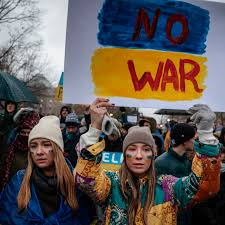
Three years ago yesterday, firty-one people were killed by a single gunman during Friday prayers in Christchurch, New Zealand. And every day for these past weeks our attention has turned to the ongoing killing in Ukraine, as Russia seems intent on destroying a people unwilling to be subjugated.
The suffering in Ukraine and other places like Gaza and Yemen is immense.
Our attention must remain in all thse places, and on all those subject to the threat and violence of others. Even in thse dark hours we can win this struggle, indeed we must. Let us pray for all those who are touched by gun violence, hearts broken by loss and for all the lives cut short. Allow peace to flood our minds and hope that all the violence in the world can be left behind.
My word of the day is "Hypocrisy" Anti war sentiment is currently being splashed all over the mainstream media here in the UK, Daily the news bombards us with images of innocent people who have been bombed, shot at displaced and lost loved ones, We are officially urged to sympathise with these people, John Lennon's song "Give peace a chance" was played at the international rugby match at Twickenham at the weekend.
The terrifying images of death and destruction inflicted on Ukraine by
the Russians brutal, criminal and irresponsible invasion have rightly aroused widespread horror, and
accompanying sympathy and solidarity with the Ukrainian people. This sentiment is encouraged by Western media and politicians.
Yet when Russia bombed Chechnya and Syria, the Western media looked the
other way. In Syria, victims of Assad’s chemical weapons attacks were
initially worthy of our sympathy. But once Syria’s revolution had
developed into a civil war, involving parties over which Washington had
little control, the Obama administration was happy to reach an agreement
with Putin: he could bomb Aleppo indiscriminately while the US focused
its efforts on destroying ISIS.
Both Russia and the US had a shared interest in keeping Assad in
power, even when his regime’s repression cost 350,000 lives and created
millions of refugees. While Obama may have had a different strategy for
achieving this objective, he shared Putin’s contempt for Syria’s
democratic opposition.
Similarly, when Hilary Clinton
needed to justify the extension and escalation of Washington’s
two-decade long occupation of Afghanistan, Afghan women and girls became
sympathetic victims needing rescuing from the Taliban. Once US troops
evacuated Kabul last October, Afghan women had served their purpose—they
have been erased from our TV screens, while their country lies in ruins..
Lets also compare and contrast to the US/ UK- led invasion of Iraq in 2003, which was justified by lies about non existent weapons of mass destruction, which broke international laws. No mention of the thousands of innocent casualties, No news coverage of bereaved parents and orphaned children, Criticism of our involvement barely tolerated and treated by some as tantamount to treason. Anti-war songs banned from the radio. Recently Tony Blair, one of the main architects of this atrocity, was awarded for his criminal efforts with a knighthood. I am reminded too that 73% of the world dictators are supported by the United States, Britain sells arms to rogue state Saudi Arabia, which have been used to kill children in Yemen. Yesterday the Saudi regime executed 81 men , in its largest mass execution in history, yet Boris Johnson is about to visit the country to beg for more oil. If our government rally cared about human rights, it would end it's cosy relationship with the Saudis, But I guess it's ok for them to have double standards.
A strong argument could also be made
that the crisis in the Ukraine could have been avoided if NATO had been
willing to rule out membership for Ukraine, granting the nation a
neutral statussimilar to Finland and Austria during the Cold War, At the
same time , Putin's rewriting of history and his insistence that
Ukraine is inherently part of Russia , along with his decision to launch
a full scale invasion is indicative that he would have done so
regardless, and far from keeping the peace Nato throughout it's
existence is a threat to it, agressive in manner and in action and is a
continued threat to all our safety..
And if the West is so opposed to bombing schools, clinics and peoples homes why is it that Palestine Action activists are currently on bail for trying to stop Elbit Systems making killer drones for use in Gaza and Yemen? And surely seperating the people who die under falling bombs into Ukrainians, Dombassions, Kurds, Afghanis, Palestinians, Alvis, Yazidis, Christians, Shias or Sunnis etc etc and taking a stance accordingly is the height of immorality, Are not all these lives equal ?
The people of countries like Iraq and Afghanistan, and those fleeing
wars, instability and poverty in North Africa and elsewhere are
dehumanised and presented as unworthy of our sympathy by the mainstream media.Their victimhood must, at all costs, be concealed—lest it bring into
question the capacity of the US and its allies to dominate and control
(often with the most brutal and naked military force) those parts of the
world.I will also point out that the state of Israel has been occupying and killing innocent children and women for years with impunity and the world's media turns a blind eye at best, and at worst acts as a mouthpiece for Israeli government propaganda,
Russia breaks International Humanitarian Law, commits war crimes and we all go mad - quite rightly. Israel
has been doing the same every single day since June 1967 and we just
shrug our shoulders and occasionally slap their wrists.
We
impose sanctions - quite rightly - on Russia but we do not impose any
on Israel. Worse - legislation is currently going through Parliament
which will make it illegal to practise Boycott,
Divestment and Sanctions against Israel
I am proudly anti-war and have been since my teenage years, I just don't understand .how anybody can be flexible on what is essentially a moral issue.
The victims of war deserve our
solidarity and support, whoever they are, and wherever they happen to
be. The Ukrainians who are bravely fighting against Russian invasion
deserve it. But so too do the Palestinians, Afghans, Syrians, Iraqis etc. We should not be fooled by the hypocritical statements of out political leaders. They'd happily increase the mayhem by sending British men and women to fight and possibly die,if it was not for the threat of a nuclear war which would devastate the whole of Europe.
At least representatives if Uktaine and Russia have met today, with an agenda about a way to restore peace. Let's all continue to fight wars, not war, for a world of peace.
As chaos reigns throughout the world I am reminded that if literary hero,: the beat writer Jack Kerouac famous for the way he smashed
literary conventions was.alive today, he would be celebrating his 100th birthday. This past Thursday, San Francisco’s City Lights, also a publisher of eight Kerouac books, celebrated this occasion with a packed online event. Other events in significant places in Kerouac’s life, like Lowell, Massachusetts—where he was born—are also planned in the coming days.
It's difficult to say much more about Jack that I haven't said over the past 13 years of this blog's existence but as I owe Kerouac a lot of debt, an individual who has been a huge influence on me so have rehashed some of my previous thoughts on him with some extra flourishes in a celebration of his truly remarkable life..
Like his character Sal Paradise in On the Road, Jack Kerouac
was restless to discover himself in postwar America. His
stream-of-consciousness writing style flowed like jazz, encompassing but
not always embracing the Beat generation of the 1950s. A writer of spontaneous prose, lover
of jazz, idealizer of México and adopter of Zen—Kerouac is a fixture in
the United States’ counterculture mythos.
Thematically, his work covers topics such as his Catholic
spirituality, jazz, promiscuity, Buddhism, drugs, poverty, and travel.
He became an underground celebrity and, with other beats,
a progenitor of the hippie movement, although he remained antagonistic
toward some of its politically radical elements.
The shaman of the Beat Generation arrived today as Jean-Louis Lebris de Kerouac to a French-Canadian
family in the factory town of Lowell, Massachusettsus USA. Variously called
the Beat Generations apostle, poet, hero, laureate, saint? Through his
own life story he created a work of fiction .Soared so high, that in
the end unfortunately found his own human skin, then found himself out
of his depth in bottled delusion, where the burning ship had become his
own.
Kerouac learned to speak French at home before he learned English at
school. Reportedly he did not learn English until he was six years old .
His father Leo Kerouac owned his own print shop, Spotlight Print, in
downtown Lowell, and his mother Gabrielle Kerouac, known to her children
as Memere,
was a homemaker. Kerouac later described the family’s home life: “My
father comes home from his printing shop and undoes his tie and removes
his1920s vest, and sits himself down at hamburger and boiled potatoes
and bread and butter, and with the kiddies and the good wife.”
Jack Kerouac endured a childhood tragedy in the summer of 1926, when
his beloved older brother Gerard died of rheumatic fever at the age of
9. Drowning in grief, the Kerouac family embraced their Catholic faith
more deeply. Kerouac’s writing is full of vivid memories of attending
church as a child: “From the open door of the church warm and golden
light swarmed out on the snow. The sound of the organ and singing could
be heard.”
Jack would earn a football scholarship to Columbia University, and planned
to work in insurance after finishing school, according to the Beat
Museum,http://www.kerouac.com/ which goes into detail about Kerouac’s rise to literary and
cultural stardom.
Before going to Columbia University first, he had to attend a year of preparatory school at the Horace
Mann School for Boys in the Bronx. So, at the age of 17, Kerouac packed
his bags and moved to New York City, where he was immediately awed by
the limitless new experiences of big city life. Of the many wonderful
new things Kerouac discovered in New York, and perhaps the most
influential on his life was jazz. He described the feeling of walking
past a jazz club in Harlem: "Outside, in the street, the sudden music
which comes from the nitespot fills you with yearning for some
intangible joy—and you feel that it can only be found within the smoky
confines of the place." It was also during his year at Horace Mann that
Kerouac first began writing seriously. He worked as a reporter for the
Horace Mann Record and published short stories in the school's literary magazine, the Horace Mann Quarterly.
He broke his leg in one of his first games and was relegated
to the sidelines for the rest of the season. Although his leg had
healed, Kerouac's coach refused to let him play the next year, and
Kerouac impulsively quit the team and dropped out of college. He spent
the next year working odd jobs and trying to figure out what to make of
his life. He spent a few months pumping gas in Hartford, Connecticut.
Then he hopped a bus to Washington, D.C., and worked on a construction
crew building the Pentagon in Arlington, Virginia.
In 1942 he left Columbia to
join the Merchant Marines completing only one voyage to Greenland
before quitting. A few months later, his ship was sunk by the
Germans, with many of his shipmates lost. In 1943 he joined the Navy,
but lasted less than two weeks before being discharged on psychiatric
grounds. He was described as 'restless, apathetic, seclusive', and
the shrinks described his 'auditory hallucinations, ideas of
reference and suicide, and a rambling grandiose philosophical
manner'.
After this he then
fell in with New York’s literary crowd.
Jack Kerouac wanted to catalog his entire life in autobiographical novels similar to Marcel Proust’s Rememberance of Things Pass.. Kerouac once said ‘I intend to collect all my work and reinsert my
pantheon of uniform names, leave the long shelf full of books there, and
die happy” Kerouac began working toward this goal
with The Town and the City. In the novel, Kerouac writes about his family’s struggles with
finances and the differences between his life in the town and the city. Allen Ginsberg hailed the book as a masterpiece and
with the help of Kerouac’s former professor at Columbia University Mark
Van Doren, the book was published in 1950 by Harcourt Brace.
Shortly after Kerouac started working on The Town and the City he met Neal Cassady in 1946 and around this time,took several
cross-country road trips with him that would later
inspire his seminal work, “On the Road.”
Kerouac produced“On the Road” in
just a few weeks, but the novel itself was a long time in the making. In
1947, Kerouac began collecting material for a new novel. In 1948, he
described it in his journal: “Two guys hitch-hiking to California in
search of something they don’t really find, and losing themselves on
the road, and coming all the way back hopeful of something else.” Notes and ideas for the novel filled hundreds of pages of journals, letters, and notebooks. In a letter to a friend, he wrote: “These
ideas and plans obsess me so much that I can’t conceal them […] they
overflow out of me, even in bars with perfect strangers.”
Throughout those years of writing Kerouac continued to take
cross-country trips with Neal Cassady, and recorded their adventures and
conversations.
In late March of 1951, his friend John Clellon Holmes had just
finished a novel about the Beats, and he showed Kerouac the manuscript.
Kerouac was angry, feeling that Holmes had stolen his subject matter.
Kerouac’s wife convinced her husband that instead of stewing about it,
he should go ahead and get his own novel written. He began writing on
April 2nd and finished on the 22nd. He wrote to Cassady: “Story
deals with you and me and the road […] Plot, if any, is devoted to your
development from young jailkid of early days to later (present) W.C.
Fields saintliness … step by step in all I saw. […] I’ve telled all the
road now. Went fast because the road is fast … wrote whole thing on
strip of paper 120 foot long (tracing paper that belonged to Cannastra) —
just rolled it through typewriter and in fact no paragraphs … rolled it
out on floor and it looks like a road.”
In 1957, “On the Road” was published by Viking,
who had previously turned it down. Viking editors insisted that Kerouac
change the names of real people so they couldn’t be sued for libel, so
Neal Cassady became Dean Moriarty.and catapulted Kerouac to fame as a
leading light of the Beat movement The book, like the roads he
traveled, embodied Kerouac's marathon urge to create, having been typed
on a continuous roll of taped-together paper measuring 120 feet in
length so he did not have to stop typing
to change paper. Then, fueled on a cocktail of mind altering
substances he unloaded the book in a marathon writing session.
Kerouac considered himself a Catholic writer. "I'm not a beatnik," he
once said. "I'm a Catholic." Biographer Douglas Brinkley said On the Road
has been misinterpreted as story of a couple of friends in search of
kicks. But, for Kerouac, it was a search for God. Every page of his
diary had a prayer or a crucifix or an appeal to God to be forgiven.
But bevertheless itt
was Kerouac who coined the term “Beat Generation” and the word“Beat” derived
from “beat up” meaning old, used, poor, as in “a beat up old tramp”. In his life, he had been part of a culture and people, who
burned like meteors. Jack Kerouac was the Beat Generations very own
mythologiser, he and his band of brothers helped redeem a bit of
America's soul. His legacy, like that of the Beat Culture, still alive,
still relevant, still taking root.
In the six years that passed between the composition and publication of On the Road,
Kerouac traveled extensively, experimented with Buddhism and wrote
many novels that went unpublished at the time. His next published
novel, The Dharma Bums (1958), described Kerouac's clumsy
steps toward spiritual enlightenment on a mountain climb with his friend, Zen poet Gary Snyder,https://teifidancer-teifidancer.blogspot.com/2021/05/happy-birthday-gary-snyder-poet.html. Dharma was followed that same year by the novel The Subterraneans, and in 1959, Kerouac published three novels: Dr. Sax, Mexico City Blues and Maggie Cassidy.
Kerouac's most famous later novels include Book of Dreams (1961), Big Sur (1962), Visions of Gerard (1963) and Vanity of Duluoz
(1968). Kerouac also wrote poetry in his later years, composing mostly
long-form free verse as well as his own version of the Japanese haiku
form. Additionally, Kerouac released several albums of spoken word
poetry during his lifetime.
Jack Kerouac in
his eighteen books and many others under Jack's influence were to me
important epiphanies on my own path of self discovery. He taught me
about "Spontaneous prose." - writing without revising....... He called
this " a spontaneous bop prosody." which is a bit like a jazz musician
taking an improvised solo, and he took it as far as he could go, with no
editing and no pause of breath. Sometimes what is left, has no meaning, a
void, but often their is a glimmer, that spells hope, that can become
endless, can run off the page, infinite but still accessible. On my
bookshelf at home Kerouacs influence groans on my bookcases, his own
works, sharing spaces with others , that were touched by his
inspiration. There is something about his tragic, magic life that
still resonates, hums, there will always be new connections, outhouses
where seeds will forever drift. New poets will emerge, to
experience, among the whole wide world, words will dance, impulsively
between time, forever and forever. Enthusiasm will be shared, thoughts will be exchanged, and
for some the personal will always be political.Passion will ignite.
Jack had a wild spirit, but such a dazzling voice, who through his
writing revealed him as a believer in humanity, a dreamer, a doer and
an explorer
of metaphysical depth. He was however also a recluse, socially awkward, and despite maintaining a prolific pace of publishing and writing, Kerouac was never able to cope with the fame he achieved after On the Road,
and his life soon devolved into a blur of drunkenness and drug
addiction that would ultimately destroy him .
After Kerouac’s breakdown on Big Sur in 1960, he returned home to be with his mother in Northport New York. Kerouac attempted to improve his physical health and continue to work.After Big Sur was released in 1962, which is a chronicle of the time when he escaped to Big Sur,running from the world, and lost in a sea of depression and alcoholism, while trying to cope with the pressures of celebrity.The novel earned critical success for its realistic accounts of sickness and madness where he rather poignantly reflects on the deterioration alcohol has caused. With the release of the novel, Kerouac began to move up and down the east coast. Kerouac still lived with his mother Gabrielle and together they relocated from New York to Florida in 1960 and from Florida to Lowell, Massachusetts in October 1962. (Gifford, Lee. Jack’s Book pg. 295) In the late fifties or early sixties, Kerouac switched from wine to whiskey, and was also drinking rum at this point, but whiskey was to remain his drink of choice (and that of his mother) for the rest of his life. In Tristessa he had said that he was drinking “Juarez Bourbon whiskey” and that he mixed it with Canadian Dry, while most biographers and friends have recounted his fondness for Johnny Walker Red. During a trip to France, Kerouac began drinking Cognac, and once told Philip Whalen that “Cognac [is] the only drink in the world, with soda and ice, that won’t actually kill you.” While a preeminent chronicler of America, Kerouac also spent a significant amount of time in Mexico, where he developed a taste for tequila and his signature drink, the margarita.Kerouac’s margarita is far from the saccharine slushie many would associate it with today. The drink is essentially a derivative of the Sidecar, substitute the cognac for tequila, the lemon juice for lime, keep the triple sec and you have it. Shake well, straining into a cocktail glass.After a few of these you’ll feel as free as Kerouac's prose.
Kerouac was aware of his alcoholism and his experiences which made up the text of Big Sur explain how the man was not coping with his problem. In the following passage, Kerouac explains alcoholism. “Any drinker knows how the process works: the first day you get drunk is okay, the morning after means a big head…you can kill with a few drinks and a meal, but if you pass up the meal and go on to another night’s drunk, and wake up to keep the toot going, and continue on to the fourth day, there’ll come one day when the drinks wont take effect because you’re chemically overloaded and you’ll have to sleep it off but can’t sleep any more because it was alcohol itself that made you sleep those last five nights, so delirium sets in-Sleeplessness, sweat, trembling, a groaning feeling of weakness where your arms are numb and useless, nightmares (nightmares of death).” (Kerouac, Big Sur pgs 74-75).
Big Sur was the last novel that would make up the Legend of Duluozcollection although the author would continue to write about his youth in future works. InBig SurKerouac concludes the novel with a detailed account of his nervous breakdown. “Masks explode before my eyes when I close them, when I look at the moon it waves, moves, when I look at my hands and feet they creep-Everything is moving, the porch is moving like ooze and mud, the chair trembles under me” (Kerouac Big Sur Pg 200). In the following paranoiac passage, Kerouac explains a premonition of his death.: "But angels are laughing and having a big barn dance in the rocks of the sea…Suddenly as clear as anything I ever saw in my life, I see the Cross…it stays a long time, my heart goes out to it, my whole body fades away to it.(Kerouac Big Sur Pgs.204-205)
Throughout his troubled life Kerouac made an effort to learn about other cultures, but the projections and language he uses are nevertheless within a white framework. He like a lot of beat writers mistranslated ideas, symbols and words to suit their own needs, creating a parallel literary reality. Artist Medinltz says that Kerouac helped “Perpetuate negative and, at the same time, romanticized racist stereotypes.” There are many scholarly papers that fortunately, have been written about this. that you can search for and read online and elsewhere.
He married Edie Parker in 1944, but their marriage ended in
divorce after only a few months. In 1950, Kerouac married Joan Haverty,
who gave birth to his only daughter, Jan Kerouac, but this second
marriage also ended in divorce after less than a year. Kerouac married
Stella Sampas, who was also from Lowell, in 1966.
Though Kerouac was married, his wife describes his isolation after
marriage. “It was bad for Jack, living in Florida. He had no real
friends. In Lowell, Jack was…as isolated as he had been in Florida.
Though she (Kerouac’s Mother) was fairly incapacitated by her stroke he
was still operating under the stern eye of Memere.”
With Kerouac’s mother sick, the author attempted to continue his
writing. Between March and May of 1967, Kerouac wrote a reworking of
the period of his life he covered in The Town and the Citycalled the Vanity of Duloz . In February of 1968, Kerouac was told by his friend Luanne Henderson
that Neal Cassady had died in Mexico City. Henderson spoke of Kerouac’s
reaction after hearing of Cassady’s death “Afterward, Jack liked to
pretend he didn’t really think Neal was dead, even telling interviewers
from The Paris Review that Neal would show up again someday and surprise
everyone.” After resettling in Florida by 1968, Kerouac settled with his wife
and together they tried to take care of the author’s ailing mother. Jack
wrote very little during his final year and would rarely leave the
house. Stuck in a sad exile,this mystical
breath had grown tired, what was once beautiful had begun to drift
towards bitterness.
Jack was not immortal, although for me his words are, and he left this
planet
on October 21 1969, at only 47 years of age, related to alcoholism from an abdominal hemorrhage.
After his death he left us with a rather complicated legacy but nevertheless Kerouac’s
influence on literature and culture is still felt very strongly today.
Artists including Bob Dylan, The Beatles, Patti Smith, Tom
Waits, The Grateful Dead, and The Doors all credit Kerouac as a
significant influence on their music and lifestyles. This is especially
so with
members of the band The Doors, Jim Morrison and Ray Manzarek who quote
Jack Kerouac and his novel On the Road as one of the band’s greatest influences, and .writers like Ken Kesey, Haruki Murakami, Richard Brautigan, Hunter S.
Thompson, Lester Bangs, and Tom Robbins have all pointed to Kerouac as a
defining influence on their writing too,
Kerouac’s iconic status shows no signs of letting up. All his books are still in print and his masterpiece On the Road remains a defining work of the post war Beat and Counterculture generation, it appears on virtually every list of the 100 greatest American novels.
Kerouac's words, spoken through the narrator Sal Paradise, continue to
inspire today's youth with the power and clarity with which they
inspired the youth of his own time
There are two types of people in this world; those
that ‘get’ Kerouac, and those that do not. I am in the first category,
of course, so happy birthday Jack, your impact
continues to be felt , your satori breath released , and your legacy
today is stronger today than ever ... om switchin on....
tomorrow's dawns chorus echoes,anesthesising the sky.... sentences
littered with wild perception, language as a spell that leaves
us forever hooked. In human existence our contradictions will
abound, freeze framed, on the road to nowhere. Kicks joy
darkness.blessed be you in golden eternity., and as Jack said "Practice
kindness all day to everybody and you will realize you're already in
heaven now."
A passage from On the Road, though written about others, may
describe him best: "I shambled after as I've been doing all my life
after people who interest me, because the only people for me are the mad
ones, the ones who are mad to live, mad to talk, mad to be saved,
desirous of everything at the same time, the ones who never yawn or say a
commonplace thing, but burn, burn, burn, like fabulous yellow roman
candles exploding like spiders across the stars and in the middle you
see the blue centerlight pop and everybody goes Awww!"
Happy 100th Birthday, Jack.Kerouac.
How to meditate- Jack Kerouac
-lights out-
fall, hands a-clasped, into instantaneous
ecstasy like a shot of heroin or morphine,
the gland inside of my brain discharging
the good glad fluid (Holy Fluid) as
i hap-down and hold all my body parts
down to a deadstop trance-Healing
all my sicknesses-erasing all-not
even the shred of a ‘I-hope-you’ or a
Loony Balloon left in it, but the mind
blank, serene, thoughtless. When a thought
comes a-springing from afar with its held-
forth figure of image, you spoof it out,
you spuff it off, you fake it, and
it fades, and thought never comes-and
with joy you realize for the first time
‘thinking’s just like not thinking-
So I don’t have to think
any
more’
Woman - Jack Kerouac
A woman is beautiful
but
you have to swing
and swing and swing
and swing like
a hankerchief in the
wind
149th Chorus - Jack Kerouac
I keep falling in love
with my mother
I dont want to hurt her
=Of all people to hurt
Every time I see her
she's grown older
But her uniform always
amazes me
For its Dutch simplicity
And the Doll she is.
The doll-like way
she stands
Bowlegged in my dreams,
Waiting to serve me
And I am only an Apache
Smoking Hashi
In old Cabashy
By the Lamp
2111th Chorus - Jack Kerouac
The wheel of the quivering meat
conception
Turns in the Void expelling human beings,
Pigs, turtles, frogs, insects, nits,
Mice, Lice, Lizards, rats, roan
Racing horses, poxy bucolic pig tics,
Horrible unnameable lice of vultures
Murderous attacking dog-armies
Of Africa, Rhinos roaming in the jungle
Vast boars and huge gigantic bull
Elephants, rams, eagles, condors,
Pones and Porcupines and Pills-
All the endless conception of living
beings
Gnashing everywhere in Consciousness
Throughout the ten directions of space
Occupying all the quarters in and out,
From supermicroscopic no-bug
To huge Galaxy Lightyear Bowell
Illuminating the sky of one mind
And then they got him - Jack Kerouac
The Oil of the Olive
Bittersweet taffies
Bittersweet cabbage
Cabbage soup made right
A hunk a grass
In a big barrel
Stunk but Good
163rd Chorus - Jack Kerouac
Left the Tombs to go
and look at the
Millions of cut glass-
-a guy clocking them,
as you look you swallow,
you get so fat
you can't leave the building
-stand straight,
don't tip over, breathe
in such a way yr fatness
deflates, go back to
the Tombs,
ride the elevator-
he tips over again'
gazes on the Lights,
eats them, is clocked,
gets so fat
he can leave elevator,
has to stand straight
and breathe out the fat -
-hurry back to the Tombs
242nd Chorus - Jack Kerouac
The sound in your mind
is the first sound
that you could sing
If you were singing
at a cash register
with nothing on yr mind-
But when that grim reper
comes to lay you
look out my lady
He will steal all you got
while you dingle with the dangle
and having robbed you
Vanish
Which will be your best reward,
T'were better to get rid o
John O'Twill, then sit a mortying
In this Half Eternity with nobody
To save the old man being hanged
In my closet for nothing
And everybody watches
When the act is done-
Stop the murder and the suicide!
All's well!
I am the Guard
Jack Kerouac: I'm Sick of Myself...I'm Not a Courageous Man
A rare interview of Jack Kerouac in French (with english subtitles) for a Canadian television channel in which he explains how he came up with the name that described the literary movement of his generation... the Beat Generation. Kerouac also talks about the differences with the beat generation and the Bohemians and when asked about himself, he admits being sick of himself, although he does think of himself as a great writer...
Jack Kerouac on the Steve Allen show 1959
Jack Kerouac Reads On the Road
This 28-minute recitation was apparently recorded on an acetate disc in
the 1950s but thought lost for decades. It re-surfaced during the late
1990s. Enjoy.
Each year on March 10th, Tibetans and allies around the world commemorate Tibetan
Uprising Day and remember the courageous Tibetans who took a stand
against Chinese imperialism. It is a symbol in Tibetan history, marking
the day in 1959 when tens of thousands of Tibetans rose up in protest
against China’s occupation of Tibet. This revolt was preceded by several deliberate acts of the Chinese which deprived the Tibetans of freedom to follow their religious practices, customs and traditions.The all-enveloping subjugation, discrimination and harassment resulted in pent up frustrations amongst the peaceful Tibetans which burst out in the form of an unprecedented uprising.
63 years after the first uprising,
Tibet’s culture is in peril with more than 800,000 Tibetan children
separated from their families and at risk of losing their connection to
their native culture. The destruction of Buddhist monuments and the
crackdown in Drakgo has been likened to the Cultural Revolution. Dozens
of Tibetans who have spread news about this tragedy have been arrested.
The vast landlocked Tibet is a region in Central Asia inhabited
mainly by the Tibetan people. For thousands of years Tibet was a self-governing, independent entity with its’ own language, script, costumes, traditions & religion. Being an independent Buddhist nation in the Himalayas, Tibet had little contact with the rest of the world. It existed as a rich cultural storehouse of the Mahayana and Vajrayana teachings of Buddhism.Religion is a unifying theme among the Tibetans, as is their language, literature, art, and world view developed by living at high altitudes, under harsh environments.
After Chinas newly established communist government took over Tibet in
1949- 50, in an invasion of unprovoked aggression, a treaty was imposed
on the Tibetan government acknowledging
sovereignty over Tibet but recognising the Tibetan governments
autonomy with respect to Tibets internal affairs. But as the Chinese
consolidated their control, they repeatedly violated the treaty, nut
since it was signed under duress anyway the agreement was already in
violation of international law. In open
resistance and with simmering resentment growing it led to the first
major popular uprising against ChinsesE rule.
On
10 March - in Lhasa in 1959, the Dalai Lama was supposed to attend a
dance troupe performance, but he was told he could not bring his
bodyguards.Fearing his abduction to Beijing soon thousands
of Tibetans surrounded the Norbulinka summer palace of their spiritual
leader, in order to protect him from being taken away by the Chinese
army. From Tibet then aged 23 he reached the safety of India having
escaped on foot disguised as a soldier in a gruelling 15- day journey over the
Himalayan mountains, traveling by night and hiding by day. where he has maintained a government-in-exile in the foothills of the Himalayas ever since.
On March 12, 1959, two days after the National Uprising Day, thousands of women gathered on the ground called Dri-bu-Yul-Khai Thang in front of the Potala Palace in Lhasa. This demonstration marks Tibetan Women’s Uprising Day. March 12th was the catalyst that sparked the Tibetan Women’s Movement for independence.
Tibetan rebels launched an attack on March 19, but Chinese troops captured the city on March 25.The uprising was vastly outnumbered and met with extreme force, and brutal suppression, some 87,000 Tibetans were killed, and some 100,000 fled as refugees.resulting in the beginning of increasingly harsh Chinese rule over Tibet.Members
of the Dalai Lama's bodyguard remanng in Llasha were disarmed and
publicly executed or arrested, and monasateries and temples around the
city were looted or destroyed.
The
Chinese government dissolved the Tibetan government headed by the
Dalai Lama on March 28, 1959, and the Panchen Lama assumed control of
the Tibetan government on April , 1959. The Malayan government condemned
the Chinese governments use of military force against the Tibetans on
March 20, 1959, and Prime Minister Nehru of India expressed support for
the Tibetan rebels on March 30, 1959.
Prior to its invasion, Tibet had a theocratic government of which the Dalai Lama was the supreme religious and temporal head. The
Chinese media routinely try to illustrate a narrative of oppression
being commonplace in Tibet before their invasion and painting the Dalai
Lama as a terrorist and dangerous seperatist to justify their
occupation, stating they freed the pEople of Tibet from "misery" and "
slavery" under a feudal serfdom controlled by the Dalai Lama and his
followers to
try and distract us from the human rights abuses that China
committed.Though it was no Shangri-La like paradise not only are their
contradictions in this false narrative of serfdom and oppression that
China likes to portray, most scholars have soundly rejected it and are
moving away from this idea.
Tibetans
since the invasion were treated as second-class citizens in their own
country. They are routinely kicked
out of their homes and sent to townships so the government can ‘develop’
occupied spaces '. Over 6,000 monasteries have been destroyed and those
that have survived are not being used by monks, but ironically, are
used as
spiritual attractions for – mostly Chinese – tourists while they tighten
Tibetans’ religious freedom. Areas that were once spiritual spots and
pure nature are used as nuclear waste sites. Worst of all, Tibetans do
not have freedom of speech, religion or movement. Many passports have
been recalled and the borders are closed, trapping Tibetans in the
country as their culture and land diminishes.Chines replaced Tibetan as
the official language, Despite official pronouncements, there has been
no practical change in this policy. Secondary school children are taught
all classes in Chinese. Athough English is a requirement for most
university courses, Tibetan school children cannot learn English unless
they forfeit study of their own language. In addition the Dalai Lama says 1.2 million people have been killed under Chinese rule, though China disputes this.
The
international community has since reacted with shock to the events that
have ocurred in Tibet. The question of Tibet was raised at the U.N
General Assembly between 199 and 1967. Three resolutions have been
passed by the General Assembly condemning China's violations of human
rights in Tibet and callIng upon China to respect their right including
their right to self determination.
The following website https://tibetuprising.org/is a useful one to view a timeline of Tibetan resistance over the decades. Large scale protests across Tibet took place in the 1980s and in 2008, as Beijing prepared to host the Olympic Games. China's
response left 227 dead, over 1,000 injured and 6,810 in prison.
Some have since been released. Some are still behind bars. Some
didn’t live to tell the tale. A few not only survived until release but
then evaded surveillance and managed to escape into exile.
At least 155
Tibetans, young and old, monks and nuns, have self immolated since 2009
calling for the freedom of Tibet and the return of His Holiness the
Dalai Lama..With no end in sight to the Chinese occupation of their motherland, the Tibetans have been forced to choose the path of self-immolations as an individual form of non-violent
protest to highlight their plight and sufferings. The gravity of the present day situation can be understood from the recent action of Tsewang Norbu, a 25 year old popular Tibetan singer attempted self immolation on February 25 in front of the Potala Palace in Llasha and was subsequently reported dead, taking the number who have self immolated to 158.
Usually, protesters on this day end up in detention. Some known as potential protesters are also arrested in advance as a cautionary measure, simply meaning that innocents are imprisoned in absence of any crime. In some cases, Tibetan protesters in Tibet have been also shot on spot. Even Tibetans residing abroad are routinely locked up in some countries before March 10, on the pretext of avoiding disturbances between the host countries and Chinese Government. Yes, March 10 is the most restricted day in Tibet. Several thousand of Chinese security force are usually sent throughout Tibet Autonomous Region. To cope with this, young and educated Tibetans have adopted new strategies to combat Beijing’s policies, always using non-violence. They of course use social media, a toll that reveal itself to be effective and efficient in waking up consciences in the world at large
Recent
evidence shows that there has been a significant increase of Tibetan
political prisoners since the protests, and torture has become more
widespread than ever. In 2015, Tibet Watch put the testimony of seven torture survivors in
front of the UN. Voices that China tried to silence now told tales of
barbaric cruelty and incredible bravery. They told of the unbreakable
spirit of Tibetan resistance. Please see the following link for more detailswww.tibetwatch.org/blood-on-the-snows
At
the moment the citizens of Tibet do not have anything that resembles
any form of basic human rights. Children and adults can dissapear at any
time. To practice their religion means they will face prison, torture
and death. The people are prevented from displaying their banned flag,
or in joining mass protests, but Tibetans still assert their desire for
freedom in the face of severe repression.
Today
this struggle is being carried forward by a generation of Tibetans
whose parents and even grandparents do not remember a life free of
Chinese rule. Tibetans’
spiritual leader has
pleaded with the Chinese government to make Tibet truly autonomous so
people can have freedom of speech, religion, and movement. The Tibetan
people should be allowed to retain their right to protest and allow
their struggle and dscontentment with China and its illegal occupation and
continued mistreatment of Tibetans to be recognised.Even though the
plight of the Tibetans does not seem to garner the media attention it
once recieved todays anniversary still marks years of oppression and
exploitation.The fact remains that China still occupies Tibet in much
the same way that Western empires of the nineteenth and twentieth
century occcupied large parts of Africa and Asia. Chinas claims to have '
liberated 'Tibet rings hollow,and the continuing Tibetan resistance
represents a legitimate important call for self-determination.
Despite being stripped of virtually all freedoms of their identity, Tibetans have continued to preserve their rich and diverse culture and traditions. The struggle is still not over yet. Tibetans are still fighting for basic human rights, such as the freedom to practice their religion, follow their own religious leaders, learn their own language in schools, being able to openly speak Tibetan, and live freely in their own country.
On this annual day of resistance and hope for the Tibetan people, I
pay tribute to the extraordinary courage of Tibetans resisting in Tibet,
and all Tibetans, past and present who have courageously resisted
China’s violent colonial rule I urge citizens around the world to join
me in calling for an end to China’s occupation of Tibet, stand in solidarity with the Tibetan people, to show them that they are not alone and that the world is responding to their calls for freedom . Call our governments to action to challenge China's repression in Tibet and to unite in action to help resolve the Tibet crisis, and hold Xi Jinping and the Chinese government accountable for it extreme and violent policies against the Tibetan people, and .commit to securing
the promise of human rights and religious freedom for the people of
Tibet and support their ongoing struggle.
International Women's Day (IWD),
celebrated on March 8, is a global day celebrating the social, economic,
cultural, and political achievements of women. The women's day has been
celebrated for well over a century, with the first one in 1911.
The day marks a call to action for accelerating gender parity.
Significant activity is witnessed worldwide as groups come together to
celebrate women's achievements or rally for women's equality.
Marked annually on March 8th, women's day is one of the most important
days of the year to celebrate women's achievements, raise awareness
about women's equality, lobby for accelerated gender parity and
fundraise for female-focused charities.
International Women’s Day has a rich history dating back to the 1900's when women across Europe and America
were finding their voice. That wanted and demanded decent jobs, better
pay, and the right to vote or hold public offices, for their
emancipation. It was out of this air of dissatisfaction that
International Women's Day was born.
At the beginning of the 20th Century women across Europe and America
were finding their voice. That wanted and demanded decent jobs, better
pay, and the right to vote or hold public offices, for their
emancipation.Women's oppression and inequality was spurring women to become more vocal and active in campaigning for change It was out of this air of dissatisfaction that
International Women's Day was born.
In 1908, 15,000 women marched through New York City demanding shorter hours,
better pay and voting rights. A year later Russian refugee, labor organiser, and
journalist Theresa Malkiel
serving on the women’s committee of the Socialist Party of America envisioned a more active role for women within the movement, she
declared February 23, 1909 “National Woman’s Day.” New York socialists
celebrated with a meeting of about 2,000 people in Manhattan.
“The very first observation of our national Woman’s Day,” recalled activist Meta L,Stern
three years later, “proved so successful that Woman’s Day became
generally accepted as an annual Socialist holiday.” Along with May Day,
she explained, the day stood “for new hopes and new ideals; the
abolition of wage slavery and sex slavery; the coming of a freer, better
and happier manhood and womanhood.” In 1910 at the Second International, a world wide socialist congress held in
Copenhagen, German Socialist Clara Zetkin tabled the idea of an
International Women's Day. She proposed that every year in every country
there should be a celebration on the same day - a Women's Day - to
press for their demands. The conference of over 100 women from 17
countries, representing unions, socialist parties, working women's clubs
- and including the first three women elected to the Finnish parliament
- greeted Zetkin's suggestion with unanimous approval and thus
International Women's Day was the result.
Following the decision agreed at Copenhagen in Denmark in 1911,
International Women's Day was honoured the first time in Austria,
Denmark, Germany and Switzerland.
Originally
called National Woman’s Day, the monumental annual celebration spread
across the world (officially celebrated in 1911), but it was Russia who unknowingly set the March 8 trend and helped
spark a revolution. When tens
of thousands of women converged in Petrograd, Russia to mark the
holiday—as well as demand an end to World War I and protest food
shortages—the demonstrations turned into a massive strike. Within
hours, 100,000 workers, including men, walked out on their jobs to join
the demonstrators.
The movement grew to as many as 150,000 striking workers within a few
days. Eventually, even the Russian army joined the marchers,
withdrawing their support from the Tsar Nicholas. It was the beginning
of the Russian Revolution.
After World War II, the holiday picked up steam, and lost many of its
associations with socialism and radical politics. As the women’s
liberation movement swept around the world in the 1970s, the United
Nations designated 1975 International Women's Year and celebrated the
holiday for the first time. Two years later in 1977, designated March 8
International Women’s Day, and, in 1996, began to adopt an annual
theme for every year. The first theme was "Celebrating the past,
Planning for the Future."The International Women’s Day website https://www.internationalwomensday.com/ has announced that this year’s theme is #BreakTheBias.The organisation is calling on people to “imagine a gender equal world”
which is free of biases, stereotypes and discrimination against women. Whether deliberate or unconscious, bias makes it difficult for women to
move ahead. Knowing that bias exists isn't enough. Action is needed to
level the playing field. Research shows that gender equality will bring benefits for the whole
of society, from healthier and safer communities to economic success and
stronger democracies.
The UN’s theme is “gender equality today for a sustainable tomorrow”. It is focusing on advancing gender equality in the context of the global climate crisis.
“Continuing
to examine the opportunities, as well as the constraints, to empower
women and girls to have a voiWomen are considered among the most vulnerable groups to the climate
change effects due to socio-economic disparities, but also as climate
champions since climate action is strengthened by their presence and
leadership. Therefore, ensuring the sustainability of the future
requires eliminating constraints to participation and increasing
opportunities for women to contribute.ce and be equal players in decision-making
related to climate change and sustainability is essential for
sustainable development and greater gender equality,” the UN said.“Without gender equality today, a sustainable future, and an equal future, remains beyond our reach.”
This year’s theme aims to emphasise the vulnerabilities of women all
over the world due to climate change-induced catastrophes. It also
acknowledges the contribution of women climate activists for their
efforts to mitigate and adapt to climate change. Two important
Sustainable Development Goals (SDGs) – climate action and gender
equality – also align with this year’s theme.
According to the UN
World Prospects 2019, “The population of females in the world is
estimated at 3,904,727,342 or 3,905 million or 3.905 billion,
representing 49.58 percent of the world population.”
The latest data from the UN shows that 80% of people currently displaced by climate change related natural disasters are women and girls. The trauma, disease and poverty left in the wake of these disasters will impact generations to come. Women are more likely to experience domestic and family violence in the wake of a natural disaster. Such statistics
show that women and girls who constitute half the world’s population
are further threatened by gender inequalities in the face of climate
disasters. These threats are looming in the form of the disproportionate
distribution of all socio-economic opportunities.
Climate
disasters negatively impact the health of women as they usually lead to
malnutrition and lack of healthcare facilities. There are numerous
reasons for the unequal distribution of health facilities for women
during climate-led emergencies. Climate calamities destroy
infrastructure, which includes hospitals and clinics. Healthcare
resources are diverted to meet the requirement of those who are directly
affected by the disaster. As a result, the reproductive health issues
of women are neglected in low-income countries. Similarly, floods and
droughts destroy agricultural land, increasing poverty risks for
farmers. Such emergencies cause poverty risks and ignore the nutrition
of adolescent girls and pregnant women, which create long-lasting health
issues for them.
Purple, green and white are the colors of International Women's Day.
Purple signifies justice and dignity. Green symbolizes hope. White
represents purity, albeit a controversial concept. The colors originated
from the Women's Social and Political Union (WSPU) in the UK in 1908.
Today we celebrate the gains women have made and to keep on calling
for the changes that are still very much needed.There have been many strides for women since the first IWD in 1911, but we still have a long way to go.
From a persisting pay gap to attacks on reproductive health, the fight for gender equality isn’t just a women’s issue, it’s a human rights issue. Women are still not
equally represented in business or politics, girls facing sexual
objectification from an early age, girls told to shrink themselves
make themselves smaller. Women still forced to flee domestic abuse,
others facing honour killing, a practice that allows family members to
murder women for dishonouring their families, by refusing arranged
marriages, removing their faith or for simply dressing in ways
considered inappropriate. I also note that the basic needs of most
Palestinian women are daily being violated by Israels's ongoing
occupation and siege. The siege in Gaza a contributing factor in one
fifth of maternal deaths in Gaza.
Yet contrary to Orientalist misrepresentation, women have been at
the heart of liberation struggles in the Middle East and North Africa.
At the moment in the region of Turkey and Kurdistan women are being
politicised in a long struggle against theocratic totalitarianism,
inspiring us in their fight for emancipation and freedom.
So today as I observe International Womens Day, I stand up for all
women still trapped by injustices, still suffering from abuse, at the
end of the day I believe the women's struggle is a struggle for the
freedom of all people, recuperating the fair value of people over
things. I recognise the practice and theory of mutual support that women
have laid, that are the foundations of social change that we must keep
building. Women who recognised the tactical necessity of standing and
working together, lest they be destroyed individually, women who put to
shame the ridiculous notion of a 'women's place'. Their struggle is ours
too. I acknowledge all those who have been persecuted, jailed,
tortured, simply for being a woman. Especially those who are among the
most vulnerable in this present moment of time - the refugees.
Let us also celebrate the powerful women who've fought dictatorship,
risked their lives to fight climate change and led mass movements for
justice across the world, we cannot let their contributions go unnoticed
today and every day. As Audre Lorde said "I am not free while any woman is unfree, even when her hackles are very different fro my own,"
In accordance with its #BreakTheBias theme, IWD organisers are asking
people to pose with their arms crossed in an act of solidarity as a symbol of their commitment
to calling out bias, dismantling stereotypes, and rejecting
discrimination and inequality.
Separately, the UN is hosting a virtual event which will explore how
women across the world are responding to the climate crisis.
Speakers
at the event include primatologist Jane Goodall DBE, climate justice
activist Maria Reyes and environmentalist Katharine Wilkinson. You can
sign up for the event here.
In London, IWD will be gathering to raise awareness of gender pay inequality.
Under the UK’s Equal Pay Act, paying women less than men for the same work is prohibited. However, the latest figures from the Office for National Statistics show that a pay gap between men and women persists, with men earning 7.9 per cent more than women in 2021.
On
Tuesday, IWD will be staging “a public act of resistance” outside some
of London’s biggest businesses. The meeting point for those who wish to
take part is the Duke of Bedford monument, Russell Square from 8am. Find
out more here.
Imagine a gender equal world. A world free
of bias, stereotypes, and discrimination. A world that is diverse,
equitable, and inclusive .A world where difference is valued and
celebrated. Together we can forge women's equality.
Individually,
we're all responsible for our own thoughts and actions - all day, every
day.We can break the bias in our communities.We can break the bias in
our workplaces.We can break the bias in our schools, colleges and
universities. Collectively we can all #BreakTheBias and say no to unacceptable patriarchal narratives.
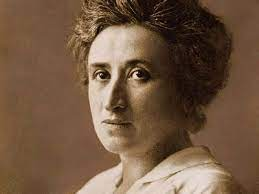
Rosa Luxemburg Marxist theorist, philosopher and economist and revolutionary socialist activist was born on March 5, 1871 in the part of Poland under the occupation of imperial Russia. Her parents were Jews. She was thus born with two “disabilities”: a national minority and a Jew. She would acquire more “disabilities” as she advanced in her revolutionary career.
A disease in early life kept her in bed for a whole year. It was wrongly treated as tuberculosis of the bone and caused irreparable damage leaving her with a hip deformity that left her with a limp for the rest of her life..
Rosa was a very intelligent child and could read and write by the age of five. At school she was always top of the class.She
had her primary and secondary education in her “homeland” and became an
activist Marxist as a teenager.From a very early age, Rosa had a deep revulsion for humans' inhumanity to other humans. For her, this went along with a deep love for humanity itself, fascinated by natural science and art as well as politics.
When the revolutionary group she joined was
crushed, she was smuggled to Zurich in Switzerland. She attended the University
of Zurich from 1889 to 1897 and came out with a doctorate degree in Political
Economy. Her doctoral dissertation was titled The Industrial Development of
Poland. From Zurich Rosa Luxemburg came to Germany where her reputation as a
brilliant Marxist had preceded her. It did not take long for her credentials to
be confirmed. She was not introduced. Rather, she introduced herself—in a
particularly audacious manner.
By the time Rosa Luxemburg arrived in Germany, the German
Social Democratic Party (SDP) had been established not only as the largest
socialist party in Europe and in the Second International of Socialists but
also as the party with the largest concentration of frontline Marxist
theoreticians anywhere.
In 1898, after marrying Gustav Lübeck to obtain German citizenship, she settled in Berlin where she joined the SDP a committed revolutionary, Luxemburg campaigned with Karl Kautsky against the revisionist Eduard Bernstein,
who argued that the best way to obtain socialism in an industrialized
country was through trade union activity and parliamentary politics.
In 1903 Luxemburg,Leo Jogiches and Julian Marchiewski formed the Social Democratic Party of Poland, As it was an illegal organization, she went to Paris to edit the party's newspaper, Sprawa Robotnicza (Workers' Cause). The arrival of Felix Dzerzhinksy
helped the movement to grow and together they formed the Social
Democratic Party of the Kingdom of Poland and Lithuania. While in Paris
she became friends with Jen Jaures and Edouard Marie Vaillant, Marxist leaders of the French working-class movement.
At the Social Democratic Party Congress
in September 1905, Luxemburg called for party members to be inspired by
the attempted revolution in Russia. "Previous revolutions, especially
the one in 1848, have shown that in revolutionary situations it is not
the masses who have to be held in check, but the parliamentarians and
lawyers, so that they do not betray the masses and the revolution." She
then went onto quote from The Communist Manifesto :
"The workers have nothing to lose but their chains; they had a world to win."
Her faith was a socialist idea that combined the powerful passion of
both mind and heart. She devoted herself to the cause of revolution,and
its preparation. She lived and breathed its fire, with selflessness and
devotion, in every waking moment she dedicated herself to its cause.
Standing bravely up for freedom with a strong powerful intellect. An
individualist, she formulated her own ideas, using her own words to
energise and radicalise the people and bring about a socialist
revolution. She argued that
" The mass strike is the first natural,
impulsive form of every great revolutionary struggle of the proletariat
and the more highly developed the antagonism is between capital and
labour, the more effective and decisive must mass strikes become. The
chief form of bourgeois revolutions, the fight at the barricades, the
open conflict with the armed poor of the state, is in the revolution
today only the culminating point, only a moment on the process of the
proletarian mass struggle."
She followed no leader, was no ones puppet and when she criticised
Lenin, it was in relation to dictatorial aspects. She said
" Terror has
not crushed us. How can you put your trust in terror."
She quoted Leon Trotsky saying
"As Marxists we have never been idol worshippers of formal democracy." She went on
"All that really means is: We have always distinquished the social
kernal of social inequality and lack of freedom hidden under the steel
shell of formal equality and freedom - not in order to reject the latter
but to spur the working class into being satisfied with the shell, but
rather, by conquering political power, to create a socialist democracy to
replace bourgeois democracy - not to eliminate democracy
altogether....... but socialist democracy is not something which begins
only in the promised land, after the foundations of socialist economy
are created, it does not come as some sort of Christmas present for the
worthy people who, in the interim, have loyally supported a handful of
socialist dictators. Socialist democracy begins simultaneously with the
beginnings of the destruction of class rule and the construction of
socialism. It begins at the very moment of the seizure of power by the
Socialist party. It is the same thing as the dictatorship of the
proletariat. Yes, dictatorship! But this dictatorship consists in the
manner of applying democracy, not in its elimination, but in energetic, resolute attacks upon the well-entrenched rights and economic relationships of bourgeois society, without which a socialist transformation cannot be accomplished. But this dictatorship must be the work of the class and not of a little leading minority in the name of the class - that is, it must proceed step by step out of the active participation of the masses, it must be under their direct influence, subjected to the control of complete public activity; it must arise out of the political training of the mass of the people."
Possibly her believe in democracy is what failed her philosophically, nevertheless the questions she posed still worth looking at today. She also wrote
" the revolution is the sole form of war, and this is also its most vital law - in which the final victory can be prepared only by a sense of defeat.".
" workers blood should not be shed in defence of the capitalist system"'
Rosa Luxemburg was prophetic in her warnings against the
evils of imperialism, nationalism, and militarism.She warned that there would always be new wars as long as imperialism and capitalism continue to exist:
“World peace cannot be secured by such utopian or
basically reactionary plans as international courts of arbitration
composed of capitalist diplomats, diplomatic agreements concerning
‘disarmament’ … ‘European federations’, ‘middle-European customs
unions’, ‘national buffer states’ and the like. Imperialism, militarism
and wars will not be abolished or damned as long as the rule of the
capitalist classes continues uncontested.”
She warned against nationalism as a mortal enemy of
workers and the socialist movement and as a breeding ground for
militarism and war.
“The immediate task of socialism”,
she wrote in
1916, “
shall be the intellectual liberation of the proletariat from the
domination of the bourgeoisie as manifest in the influence of
nationalistic ideology.”
Her warnings were prophetic, insofar as some of the worst crimes of the
twentieth century—from the First to the Second World War and beyond—were
committed in the name of nationalism, national hegemony, “national
defence”, “national vital space”, and the like.
As a leader of the radical wing of the German Social Democratic Party (SPD), since 1899,she had became an important figure in the world socialist movement, and became involved in the international organisation of workers, however she broke with the SPD however after it supported the imperialist drive towards war. She campaigned adamantly against the war , attempting to whip up general strikes and circulating anti-war propoganda She did so alongside comrades who, in every country, had a clear understanding of who benefitted from the slaughter of millions of young people on the battlefields.
Because of her relentless socialist agitation during the terrible First World War , she was imprisoned for it's duration, but after Germany's defeat she was released, and with her friend Karl Liebnecht,https://teifidancer-teifidancer.blogspot.com/2019/08/karl-liebknecht-german-revolutionary.html formed the Spartacus league, and she assumed the leadership of the radical independent socialists. Her will and her desire was to see an end to all exploitation and oppression.
She herself took part in revolutionary events , recognising the need of a revolutionary party, which could unite and give a lead in a revolutionary situation, seeing socialism as a movement of the proletarian masses that should emphasise unity and equality rather than highlight the oppression of any particular group, with an undogmatic commitment to an unfinished notion of freedom that still appeals to many people today.
In November 1918 after four years of war, German society crumbled both at the front at home, and a revolutionary fervour swept the land, the working class took to the streets in a series of strikes and the navy mutinied. though critical with some demands of the revolutionary movement, Rosa threw in her lot with her comrades, believing that she could not simply wait on the sidelines. After the revolution failed subsequently on January 15, she and some of her her comrades were arrested, including Karl Liebnecht, Rosa was shot and dumped in the Landweher canal, Berlin.by right wing troops opposed to the revolutionary movement that swept through Germany in the wake of the First World War.
Famously on the evening of her murder almost certainly knowing that her fate was sealed she wrote.
'"The leadership has failed. Even so, the leadership can and must be recreated from the masses and out of the masses. The masses are the decisive element, they are the rock on which the final victory of the revolution will be built... Order reigns in Berlin! You stupid henchmen! Your 'order' is built on sand. Tomorrow the revolution will already 'raise itself with a rattle' and announce with fanfare, to your terror: I was, I am , I shall be!"
The murder of Rosa and Kark re-ignited the communist revolution, four months of bloody upheaval followed. Rosa's body was later found and buried, together with Lienbnecht, in Friedricsfelde Central Cemetery.
Today her ideas can be pressed into many meanings. There is a feminist Rosa, an anarchist Rosa, then there is a red Rosa, but she remains an icon in the truest sense of the word, She had determination by the buckets and a steely willful commitment. A combatant who strove for peace. who did not hesitate in her beliefs, to speak and proclaim with her own independent reason her own opinion. For that alone I respect her.
Her life remains a model of intellectual rigor and unshakable revolutionary faith. Her indelible mark has been left on the world, who combined ideals with action , her struggle had always been to make all humans lives better, which she worked towards with every fibre of her being. Her passionate life still stands as a beacon to those who have chosen to take up the many battles she waged.
Here is poem written by Bertolt Brecht in 1920 about Rosa. Long may Red Rosa be remembered as a strong defender of internationalist revolutionary socialism.
About the drowned girl - Bertolt Brecht
As she drowned, she swam downwards and was borne,
From the smaller streams to the larger rivers,
In wonder the opal of the heavens shone,
As if wishing to placate the body that was hers.
Catching hold of her were the seaweed , the algae,
Slowly she became heavy as downwards she went,
Cool fish swam around her legs, freely,
Animals and plants weight to her body lent.
Dark light smoke in the evenings the heavens grew,
But early in the morning the stars dangled, there was light,
So that for her, there remained too,
Morning and evening, day and night.
Her cold body rotted in the waters there,
Slowly, step by step, god too forgot,
First her face, then her hands, and finally her hair
She became carrion of which the rivers have a lot.